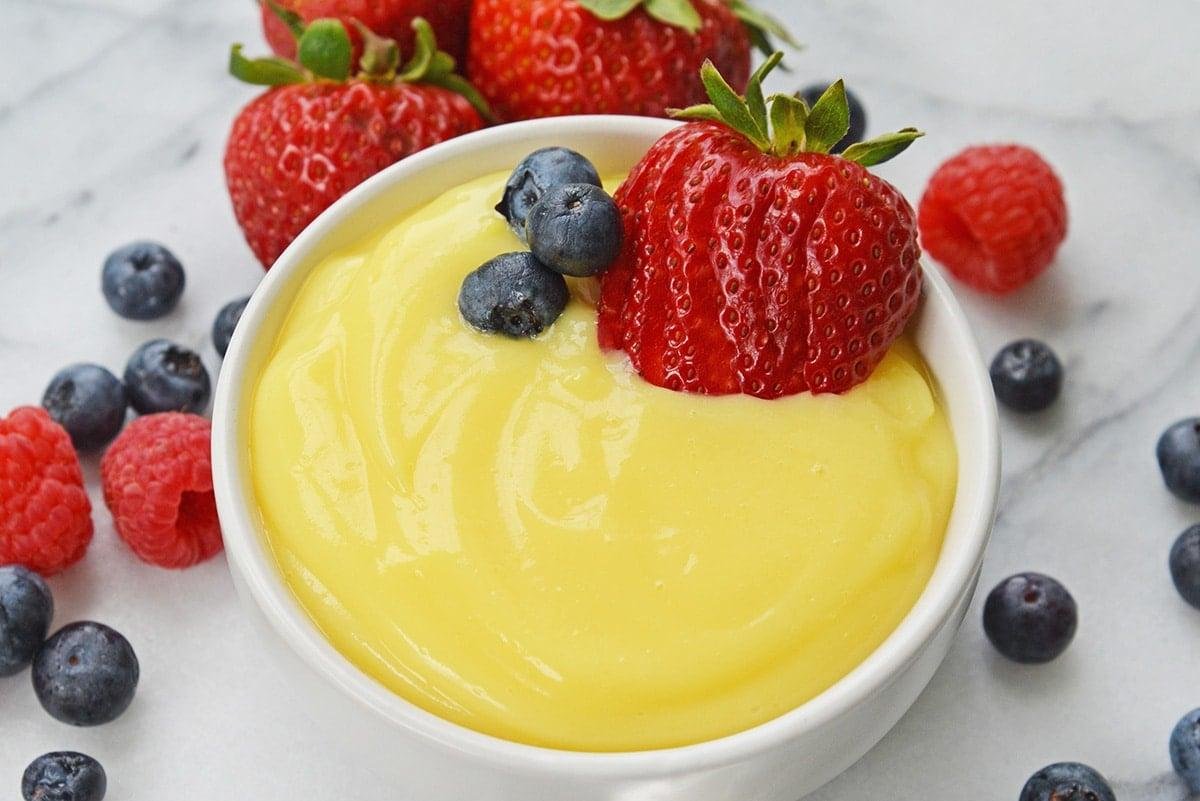
Vanilla custard is a smooth, creamy dessert made with milk, egg yolks, sugar, and real vanilla. It has a delicate sweetness and rich vanilla flavor, with a silky texture that makes it just as enjoyable on its own as it is served alongside cakes, pies, fresh fruit, or pastries.
This homemade vanilla custard is prepared on the stovetop using simple pantry ingredients. A little cornstarch helps create a thicker, more reliable consistency, while egg yolks add richness and give the custard its classic creamy texture.
Whether you serve it warm or chilled, this easy vanilla custard is a lovely dessert for everyday treats, holiday gatherings, or whenever you want something simple and comforting.
Recipe Overview
| Detail | Information |
|---|---|
| Prep Time | 10 minutes |
| Cook Time | 10–15 minutes |
| Total Time | 25 minutes |
| Servings | 4 |
| Difficulty | Easy |
| Cooking Method | Stovetop |
Why You’ll Love This Recipe
-
Simple ingredients: You only need a handful of everyday ingredients to make homemade custard.
-
Rich vanilla flavor: Vanilla extract gives the custard a warm, familiar flavor without overpowering its creamy taste.
-
Smooth and creamy: Egg yolks and cornstarch work together to create a thick, silky consistency.
-
Versatile dessert: Enjoy it warm, serve it chilled, or use it as a filling for cakes, tarts, and pastries.
-
Make-ahead friendly: Prepare it in advance and refrigerate it until you’re ready to serve.
Ingredients
This recipe makes approximately four servings.
-
2 cups whole milk
-
4 large egg yolks
-
½ cup granulated sugar
-
2 tablespoons cornstarch
-
2 tablespoons unsalted butter
-
2 teaspoons pure vanilla extract
-
⅛ teaspoon salt
Ingredient Notes
Whole milk: Whole milk provides a creamy consistency and balanced flavor. Lower-fat milk can work, but the finished custard may be slightly less rich.
Egg yolks: Egg yolks contribute richness, color, and a smooth custard texture. Separate the eggs carefully to avoid getting egg whites into the mixture.
Cornstarch: This helps thicken the custard and makes it easier to achieve a spoonable consistency. It also provides some stability during cooking.
Vanilla extract: Pure vanilla extract gives the custard its signature flavor. Vanilla bean paste is another excellent option.
Unsalted butter: Stirring in butter at the end adds a little extra richness and gives the custard a glossy finish.
How to Make Vanilla Custard

1. Prepare the egg mixture
In a medium heatproof bowl, whisk together the egg yolks, granulated sugar, cornstarch, and salt until the mixture looks smooth and slightly lighter in color.
Make sure there are no visible lumps of cornstarch.
2. Warm the milk
Pour the milk into a medium saucepan and place it over medium-low heat.
Heat for approximately 3–5 minutes, stirring occasionally, until the milk is steaming and small bubbles begin forming around the edges. Avoid bringing it to a full boil.
3. Temper the egg yolks
Slowly pour about ½ cup of the warm milk into the egg yolk mixture while whisking continuously.
This gradually raises the temperature of the yolks and helps prevent them from scrambling.
Once combined, slowly whisk the tempered egg mixture back into the saucepan with the remaining milk.
4. Cook until thickened
Place the saucepan over medium-low heat.
Whisk continuously for approximately 4–7 minutes, making sure to reach the corners and bottom of the pan.
The custard will gradually become thicker and should coat the back of a spoon. It should reach approximately 175–180°F (79–82°C).
Do not let it boil vigorously, as excessive heat can affect its smooth texture.
5. Add the butter and vanilla
Remove the saucepan from the heat.
Stir in the unsalted butter and vanilla extract until the butter melts completely and the custard looks smooth and glossy.
6. Strain and cool
For an extra-smooth result, pour the custard through a fine-mesh strainer into a clean bowl.
Press plastic wrap directly against the surface to prevent a skin from forming.
Allow it to cool slightly, then refrigerate for at least 2 hours if you prefer chilled custard. It will become thicker as it cools.
Expert Tips for the Best Vanilla Custard
-
Whisk continuously: Once the egg mixture goes into the saucepan, keep whisking to distribute the heat evenly and prevent lumps.
-
Use moderate heat: High heat can cause the eggs to cook too quickly. Medium-low to medium heat gives you better control.
-
Temper the eggs properly: Adding warm milk gradually helps prevent scrambled egg pieces in your custard.
-
Measure the cornstarch accurately: Too much can make the custard overly thick or slightly starchy.
-
Strain before chilling: A fine-mesh strainer removes small lumps and helps create a smoother finish.
-
Cover the surface: Pressing plastic wrap directly onto the custard prevents a thick skin from developing.
Common Mistakes to Avoid
1. Adding hot milk too quickly
Pouring all the hot milk into the egg yolks at once can cook the eggs unevenly. Add it gradually while whisking.
2. Cooking over high heat
Excessive heat can cause the custard to become lumpy. Keep the temperature controlled and stir continuously.
3. Skipping the cornstarch mixing step
Adding dry cornstarch directly to hot milk can create lumps. Whisk it thoroughly with the sugar and egg yolks first.
4. Stopping cooking too early
Custard that hasn’t thickened sufficiently may remain runny after cooling. Look for a mixture that coats the back of a spoon before removing it from the heat.
5. Leaving the custard uncovered
Air exposure can create an unpleasant skin on the surface. Cover it directly with plastic wrap while cooling.
Easy Variations
Vanilla Bean Custard: Replace the vanilla extract with the seeds from one vanilla bean. Add the scraped pod to the milk while warming, then remove it before combining the mixtures.
Cinnamon Vanilla Custard: Add a small pinch of ground cinnamon for gentle warmth. You can also steep a cinnamon stick in the milk while heating.
Lemon Vanilla Custard: Add ½ teaspoon of finely grated lemon zest for a subtle citrus flavor that complements the vanilla.
Chocolate Custard: Stir 2 ounces of finely chopped semisweet chocolate into the hot custard after removing it from the heat. Mix until completely melted.
Dairy-Free Vanilla Custard: Use unsweetened oat milk or soy milk and a dairy-free butter alternative. The flavor and thickness may vary depending on the milk used.
Ingredient Substitutions
| Ingredient | Substitute | What to Expect |
|---|---|---|
| Whole milk | 2% milk | Slightly lighter custard |
| Granulated sugar | Light brown sugar | Mild caramel flavor |
| Vanilla extract | Vanilla bean paste | Stronger vanilla appearance and flavor |
| Unsalted butter | Salted butter | Slightly saltier flavor |
| Cornstarch | Arrowroot starch | Different thickening behavior and texture |
For the most reliable consistency, keep the egg yolks and cornstarch in the recipe. Replacing both with other thickeners will produce a noticeably different dessert.
What to Serve With Vanilla Custard
Vanilla custard pairs beautifully with desserts and fresh fruit. Here are some serving ideas:
-
Fresh berries: Strawberries, raspberries, and blueberries provide a refreshing contrast to the creamy custard.
-
Apple crumble: Serve warm custard over apple crumble for a comforting dessert combination.
-
Fruit tart: Use chilled custard as a filling for a fruit tart topped with fresh seasonal fruit.
-
Pound cake: Spoon custard over slices of pound cake for a simple dessert.
-
Shortbread cookies: Serve a small bowl of custard alongside buttery shortbread for dipping.
-
Banana slices: Fresh bananas add natural sweetness and a soft texture.
Storage & Reheating
Refrigerator: Transfer leftover vanilla custard to an airtight container or cover its surface directly with plastic wrap. Refrigerate promptly and use within 3 days.
Freezing: Freezing is not recommended. Custard containing eggs and cornstarch can separate or become grainy after thawing.
Reheating: If you prefer warm custard, gently reheat it in a saucepan over low heat. Stir continuously until warmed through. Avoid boiling.
Restoring the texture: If refrigerated custard becomes too thick, whisk in a small splash of milk until it reaches your preferred consistency.
For food safety, refrigerate perishable custard within 2 hours of preparation, or within 1 hour if the surrounding temperature is above 90°F (32°C).
Frequently Asked Questions
1. What is vanilla custard made of?
Traditional vanilla custard is made with milk, egg yolks, sugar, and vanilla. This recipe also includes cornstarch for additional thickening and butter for a richer finish.
2. Is vanilla custard better served warm or cold?
Both options work well. Warm custard has a softer, more pourable consistency, while chilled custard becomes thicker and more pudding-like. The choice depends on how you plan to serve it.
3. Why is my vanilla custard lumpy?
Lumps can develop when the eggs cook too quickly or the cornstarch isn’t mixed properly. Temper the egg yolks with warm milk, maintain moderate heat, and whisk continuously.
4. How do I make vanilla custard thicker?
Allow the custard to cook until it properly thickens and coats the back of a spoon. Remember that it will become firmer after refrigeration. Avoid adding extra cornstarch directly to the hot mixture.
5. Can I make vanilla custard ahead of time?
Yes. Prepare it up to a day ahead, cover the surface with plastic wrap, and refrigerate. Give it a gentle whisk before serving if needed.
6. Is vanilla custard the same as vanilla pudding?
They are similar but not identical. Traditional custard relies on eggs for richness and thickening, while many American pudding recipes use cornstarch as their primary thickener. This recipe uses both egg yolks and cornstarch for a rich, spoonable consistency.
Final Thoughts
Homemade vanilla custard is a simple dessert that proves you don’t need complicated ingredients to make something satisfying. Its creamy texture and gentle vanilla flavor make it a lovely addition to fruit, cakes, pastries, and many other desserts.
Keep a batch in the refrigerator for an easy sweet treat, or serve it warm alongside your favorite baked dessert.
Leave a Reply