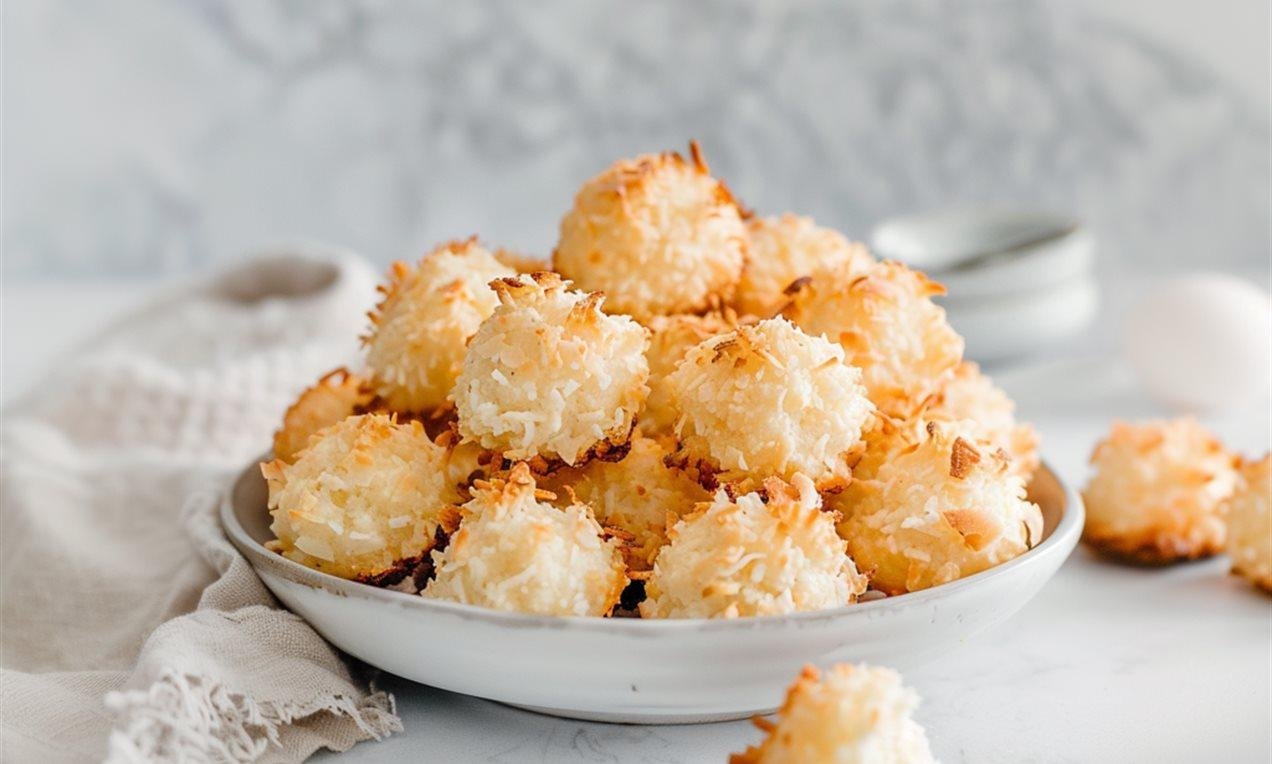
Coconut Macaroons are sweet, chewy cookies made with shredded coconut, egg whites, sweetened condensed milk, and vanilla. They have lightly golden edges, a tender center, and plenty of coconut flavor in every bite.
Unlike French macarons, which are delicate almond-based sandwich cookies, coconut macaroons are simple drop cookies that require no special equipment or complicated techniques. They’re wonderful for holiday cookie trays, afternoon treats, dessert tables, or whenever you’re craving something sweet and coconutty.
This easy coconut macaroons recipe uses a handful of everyday ingredients and takes about 35–40 minutes from preparation to cooling. You can enjoy them plain or finish them with a dip of melted dark chocolate.
Recipe Overview
- Prep Time: 15 minutes
- Cook Time: 20–25 minutes
- Cooling Time: 15–20 minutes
- Total Time: Approximately 55 minutes
- Servings: 24 macaroons
- Difficulty: Easy
Why You’ll Love This Recipe
- Simple ingredients: You only need a few basic baking ingredients to make these cookies.
- Chewy centers: Sweetened condensed milk helps keep the inside moist and tender.
- Golden edges: Baking gives the coconut a lightly toasted exterior.
- Easy to customize: Add chocolate, almond extract, or a little citrus zest.
- Great for sharing: These bite-sized cookies work well for holidays, parties, and homemade dessert gifts.
Ingredients
- 1 (14-ounce) package sweetened shredded coconut (about 5⅓ cups)
- 3 large egg whites, at room temperature
- ½ cup sweetened condensed milk
- 1 teaspoon pure vanilla extract
- ¼ teaspoon salt
- 6 ounces semisweet or dark chocolate, optional, for dipping or drizzling
Ingredient Notes
Sweetened shredded coconut: Use sweetened shredded coconut rather than unsweetened desiccated coconut. Its moisture and texture help create soft, chewy macaroons.
Egg whites: Room-temperature egg whites are easier to whip to a consistent volume. Separate them carefully, making sure no egg yolk gets into the whites.
Sweetened condensed milk: This adds sweetness, moisture, and binding power. Do not confuse it with evaporated milk, which is unsweetened and much thinner.
Vanilla extract: Pure vanilla adds warmth and complements the coconut flavor.
Chocolate: Semisweet or dark chocolate provides a pleasant contrast to the sweet coconut. It is optional.
How to Make Coconut Macaroons
1. Prepare the oven and baking sheets
Preheat your oven to 325°F. Line two baking sheets with parchment paper.
Arrange the oven racks near the center so the cookies bake evenly.
2. Mix the coconut ingredients
Add the shredded coconut, sweetened condensed milk, vanilla extract, and salt to a large mixing bowl.
Stir until the coconut is evenly coated and the mixture holds together when pressed. It should be moist and sticky without having excess liquid pooling at the bottom.
3. Whip the egg whites
Place the egg whites in a clean, dry mixing bowl.
Using an electric mixer, beat on medium-high speed until stiff peaks form. When you lift the beaters, the peaks should stand upright without folding over.
4. Fold everything together
Add about one-third of the whipped egg whites to the coconut mixture and gently fold to loosen it.
Add the remaining egg whites in two additions, folding carefully with a spatula until evenly incorporated.
Avoid vigorous stirring because it can deflate the egg whites.
5. Shape the macaroons
Use a tablespoon-sized cookie scoop or two tablespoons to portion the mixture onto the prepared baking sheets.
Shape each portion into a compact mound, gently pressing stray coconut strands back into place.
Leave approximately 1½ inches between cookies.
6. Bake until golden
Bake for 20–25 minutes, rotating the baking sheets halfway through if using two racks.
The macaroons are ready when the edges and tops are lightly golden and the cookies look set.
Allow them to cool completely on the baking sheets before moving them. They will firm up as they cool.
7. Add the chocolate coating (optional)
Place the chocolate in a microwave-safe bowl. Heat in 20-second intervals, stirring between each interval until smooth.
Dip the bottoms of the cooled macaroons into the melted chocolate, or drizzle chocolate over their tops.
Place them on parchment paper and let the chocolate set before serving.
Expert Tips
- Use the right coconut: Sweetened shredded coconut gives the cookies their characteristic moist, chewy texture.
- Keep your mixing bowl clean: Even a small amount of egg yolk or grease can interfere with whipping egg whites.
- Fold gently: Preserve as much air as possible when incorporating the egg whites.
- Shape firmly: Compact mounds hold together better during baking.
- Watch the color: Coconut can brown quickly toward the end of baking. Remove the cookies when the edges are golden rather than dark brown.
- Cool before dipping: Warm cookies can cause melted chocolate to slide off instead of forming a neat coating.
Common Mistakes to Avoid
Using evaporated milk instead of condensed milk: Evaporated milk does not provide the sweetness or thickness needed for this recipe.
Using unsweetened coconut without adjusting the recipe: Unsweetened coconut has different moisture and sweetness levels, which can affect the finished texture.
Overmixing the egg whites: Aggressive mixing after whipping can remove the air that helps keep the macaroons lighter.
Making loose mounds: If the mixture is not packed together, the cookies may spread or lose their shape.
Removing them too early: Let the cookies cool on the baking sheet so they can firm up before handling.
Easy Variations
- Chocolate Coconut Macaroons: Dip the bottoms in melted dark chocolate and drizzle extra chocolate over the tops.
- Almond Coconut Macaroons: Replace ¼ teaspoon of vanilla with almond extract for a subtle almond flavor.
- Orange Coconut Macaroons: Add 1 teaspoon of finely grated orange zest to the coconut mixture.
- Coconut Almond Joy Macaroons: Add a few finely chopped almonds and finish with a dark chocolate coating.
Ingredient Substitutions
- Chocolate: Use milk chocolate or white chocolate instead of dark chocolate.
- Vanilla extract: Coconut or almond extract can be used in small amounts for a different flavor.
- Sweetened coconut: Unsweetened coconut is not a direct one-to-one replacement in this recipe because its moisture and sweetness differ.
- Fresh egg whites: Carton egg whites may not whip as reliably, so fresh separated egg whites are preferable for this method.
What to Serve With Coconut Macaroons
Coconut macaroons are sweet enough to enjoy on their own, but they also pair nicely with:
- Coffee or espresso: Their slightly bitter flavor balances the sweetness.
- Black tea: A simple afternoon pairing.
- Fresh strawberries and raspberries: Their natural tartness complements the coconut.
- Vanilla ice cream: Serve a macaroon alongside a scoop for an easy dessert.
- Fresh fruit platter: A light option for holiday dessert tables.
Storage & Reheating
Room temperature: Once completely cooled, store coconut macaroons in an airtight container for up to 3 days. Keep them in a cool, dry place.
Refrigerator: Refrigeration is not necessary for plain macaroons, but chocolate-coated cookies can be refrigerated if your kitchen is particularly warm. Allow them to come closer to room temperature before serving.
Freezer: Arrange completely cooled macaroons in a single layer until firm, then transfer them to a freezer-safe container with parchment paper between layers. Freeze for up to 3 months.
Thawing: Let frozen macaroons thaw at room temperature before serving.
Reheating: These cookies are generally served at room temperature. If you want to refresh their exterior, warm them briefly in a 300°F oven and allow them to cool before serving. Avoid reheating chocolate-coated cookies.
Frequently Asked Questions
1. What is the difference between coconut macaroons and French macarons?
Coconut macaroons are chewy coconut-based cookies made with shredded coconut and egg whites. French macarons are delicate sandwich cookies made with almond flour, egg whites, and powdered sugar, usually filled with buttercream or ganache.
2. Why are my coconut macaroons falling apart?
The mixture may not have enough moisture or may not have been packed firmly enough. Make sure the coconut is evenly coated with the condensed milk and gently fold in the whipped egg whites.
3. Can I make coconut macaroons without condensed milk?
Yes, there are traditional recipes that use egg whites and sugar as the main binding ingredients. However, condensed milk contributes moisture and sweetness, so removing it requires a different recipe rather than a simple substitution.
4. How do I know when coconut macaroons are done?
Look for lightly golden tops and edges. The cookies should look set rather than wet. They will become firmer as they cool.
5. Can I make coconut macaroons ahead of time?
Yes. Bake them a day or two ahead and store them in an airtight container. If adding chocolate, allow the cookies to cool completely before coating.
6. Are coconut macaroons gluten-free?
This recipe contains no wheat flour or other gluten-containing ingredients. However, check the labels on packaged coconut, condensed milk, chocolate, and other ingredients for possible cross-contact or gluten-containing additives.
Final Thoughts
Coconut Macaroons are a straightforward homemade cookie with a lovely combination of toasted coconut, chewy centers, and crisp golden edges. They’re easy to prepare, simple to customize, and especially nice with a little dark chocolate.
Whether you’re adding them to a holiday cookie tray or making a small batch for an afternoon treat, these coconut cookies are a lovely way to enjoy a classic coconut dessert.
Leave a Reply