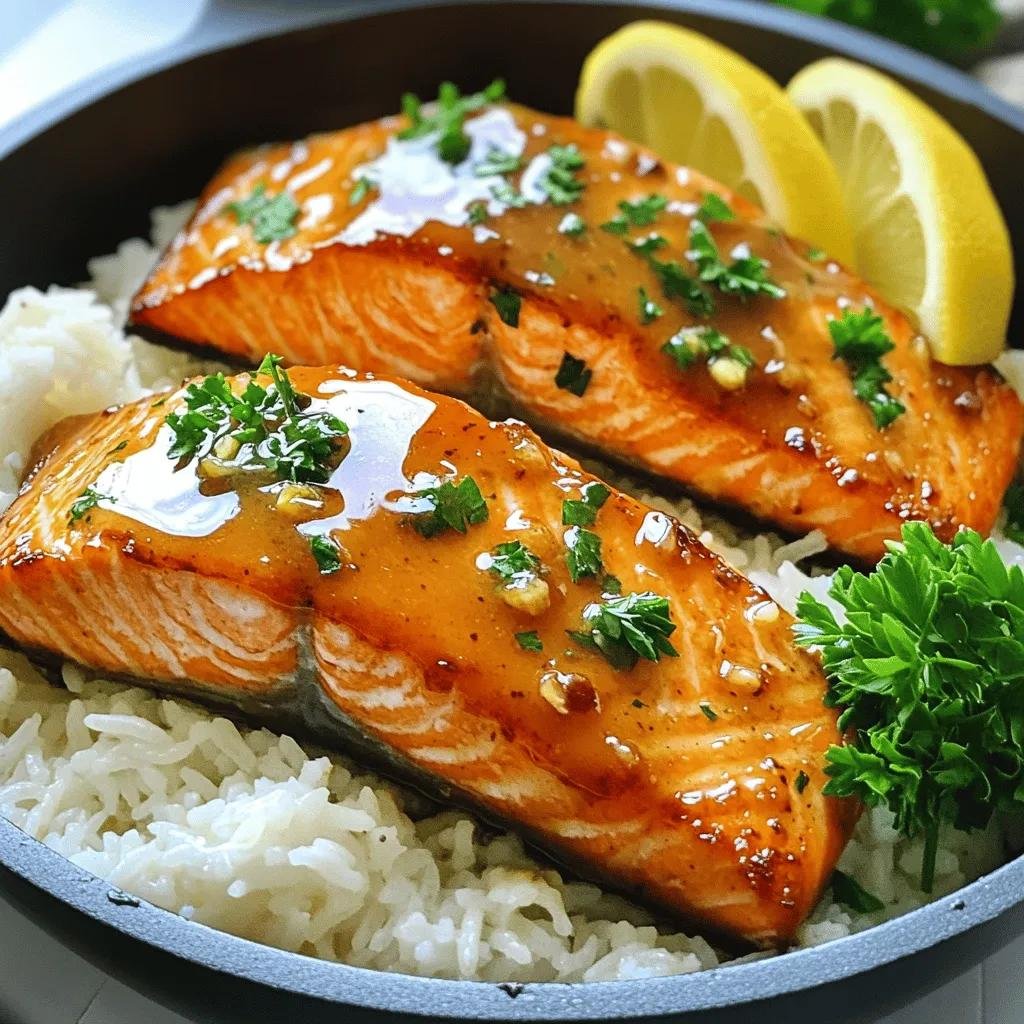
One-Pan Honey Garlic Salmon Rice Skillet is a satisfying dinner that combines tender salmon, fluffy rice, and a sweet-savory garlic sauce in one skillet. The salmon is coated with honey, soy sauce, and garlic, while the rice cooks with chicken broth and seasonings to absorb plenty of flavor.
It’s a convenient option for busy weeknights when you want a complete meal without preparing several separate dishes. With simple ingredients and minimal cleanup, this honey garlic salmon rice skillet brings protein, rice, and flavor together in one pan.
Recipe Overview
| Detail | Information |
|---|---|
| Prep Time | 15 minutes |
| Cook Time | 30–35 minutes |
| Total Time | 45–50 minutes |
| Servings | 4 |
| Difficulty | Easy to moderate |
Why You’ll Love This Recipe
-
One-pan convenience: The rice and salmon cook in the same skillet, keeping cleanup simple.
-
Sweet and savory flavor: Honey, garlic, and soy sauce create a balanced glaze for the salmon.
-
A complete meal: Salmon and rice provide a satisfying combination of protein and carbohydrates.
-
Simple ingredients: Most ingredients are easy to find at a regular grocery store.
-
Flexible serving options: Add your favorite vegetables or adjust the sauce to suit your taste.
Ingredients
-
1 pound skinless salmon fillets, cut into 4 portions
-
1 cup long-grain white rice, rinsed
-
1 ¾ cups low-sodium chicken broth
-
2 tablespoons olive oil, divided
-
3 cloves garlic, minced
-
3 tablespoons honey
-
2 tablespoons low-sodium soy sauce
-
1 tablespoon fresh lemon juice
-
½ teaspoon paprika
-
½ teaspoon salt, or to taste
-
¼ teaspoon black pepper
-
½ teaspoon grated fresh ginger (optional)
-
1 cup broccoli florets (optional)
-
2 tablespoons chopped green onions
-
1 teaspoon sesame seeds
-
Lemon wedges, for serving
Ingredient Notes
Salmon: Fresh or fully thawed frozen salmon works well. Skinless fillets are convenient because they can be portioned and coated evenly with the glaze.
Rice: Long-grain white rice is a reliable choice because it cooks within the same general timeframe as the other ingredients. Avoid instant rice or brown rice without adjusting the liquid and cooking time.
Honey: Honey provides sweetness and helps create a glossy coating on the salmon.
Soy sauce: Low-sodium soy sauce adds savory depth without making the dish excessively salty.
Chicken broth: Broth gives the rice more flavor than plain water. Low-sodium broth makes it easier to control the seasoning.
How to Make One-Pan Honey Garlic Salmon Rice Skillet
1. Prepare the salmon and sauce. Pat the salmon dry with paper towels. In a small bowl, whisk together honey, soy sauce, minced garlic, lemon juice, paprika, black pepper, and ginger if using. Set aside.
2. Season and sear the salmon. Heat 1 tablespoon olive oil in a large, deep skillet over medium heat. Season the salmon lightly with salt. Sear for approximately 2 minutes per side until lightly golden. Transfer to a plate. The salmon does not need to cook through at this stage.
3. Prepare the rice. Add the remaining olive oil to the same skillet. Stir in the rinsed rice and cook for about 1 minute, stirring gently. Pour in the chicken broth and scrape up any flavorful browned bits from the bottom of the pan.
4. Simmer the rice. Bring the broth to a gentle boil. Reduce the heat to low, cover the skillet tightly, and cook for approximately 12–15 minutes, or until most of the liquid has been absorbed and the rice is nearly tender. Follow the rice package instructions if they require a different cooking time.
5. Add the salmon and glaze. Arrange the salmon portions over the partially cooked rice. Spoon the honey garlic sauce over the salmon, allowing a little to run onto the rice. If using broccoli, arrange the florets around the salmon.
6. Finish cooking. Cover the skillet again and cook over low heat for approximately 6–10 minutes, depending on the thickness of the salmon. Check that the rice is tender and the salmon reaches an internal temperature of 145°F at its thickest part. If the rice needs additional time, remove the salmon once cooked and continue cooking the rice with a splash of broth.
7. Garnish and serve. Remove the skillet from the heat. Sprinkle with green onions and sesame seeds. Serve with fresh lemon wedges and spoon some of the honey garlic sauce from the pan over each portion.
Expert Tips
-
Rinse the rice: Rinsing removes excess surface starch and helps prevent overly sticky rice.
-
Use a tight-fitting lid: Keeping steam inside the skillet is essential for evenly cooked rice.
-
Choose similar-sized salmon portions: This helps the pieces finish cooking at approximately the same time.
-
Keep the heat low: High heat can cause the rice to stick before it has absorbed enough liquid.
-
Check the rice separately: Salmon may finish cooking before the rice, so remove it if necessary rather than overcooking it.
Common Mistakes to Avoid
-
Adding the salmon too early: Salmon cooks faster than rice. Adding it near the end helps keep it tender.
-
Using too much liquid: Excess broth can make the rice mushy. Measure carefully.
-
Cooking over high heat: A gentle simmer is better for cooking rice evenly.
-
Skipping the rice rinse: Excess starch can affect the final texture.
-
Overcooking the salmon: Check its internal temperature rather than relying only on cooking time.
Easy Variations
-
Spicy honey garlic salmon: Add ½ teaspoon red pepper flakes or a little sriracha to the sauce.
-
Vegetable-packed skillet: Add broccoli, sliced carrots, or snap peas during the final cooking stage.
-
Sesame garlic version: Add 1 teaspoon toasted sesame oil to the finished dish.
-
Brown rice option: Brown rice requires more liquid and a longer cooking time. Cook it separately or adjust the recipe according to its package directions before adding the salmon.
Ingredient Substitutions
-
Chicken broth: Vegetable broth or water can replace chicken broth, although water produces a milder flavor.
-
Soy sauce: Tamari is a suitable alternative for a gluten-free version when paired with certified gluten-free ingredients.
-
Honey: Maple syrup can replace honey, giving the sauce a slightly different flavor.
-
Fresh garlic: ¾ teaspoon garlic powder can be used if fresh garlic is unavailable.
-
Salmon: Skinless trout portions can work with a similar cooking approach, although cooking time may vary.
What to Serve With It
This skillet is already a complete meal, but a few simple sides can round it out:
-
Cucumber salad: Adds a cool, refreshing contrast to the warm honey garlic sauce.
-
Steamed edamame: Provides a simple vegetable side with a similar Asian-inspired flavor profile.
-
Roasted asparagus: Offers a slightly crisp texture alongside the tender rice.
-
Fresh green salad: A light salad with lemon dressing balances the sweetness of the glaze.
Storage & Reheating
Refrigerator: Transfer leftovers to an airtight container and refrigerate within 2 hours of cooking. Use within 3–4 days.
Freezing: Cooked salmon and rice can be frozen, although the salmon may become slightly drier after thawing. Store in a freezer-safe container for up to 2 months for best quality.
Reheating: Add a tablespoon or two of water or broth to the rice and reheat in a covered microwave-safe dish until steaming hot throughout. Reheat gently to help prevent the salmon from drying out. For food safety, leftovers should reach 165°F when reheated.
Frequently Asked Questions
1. Can I use frozen salmon for this recipe?
Yes. Thaw frozen salmon completely in the refrigerator before cooking. Pat it dry to remove excess moisture so it sears properly.
2. Can I use brown rice instead of white rice?
Yes, but brown rice takes considerably longer to cook and generally requires more liquid. For the most reliable results, cook it separately before combining it with the salmon.
3. How do I prevent the rice from sticking to the skillet?
Use a heavy-bottomed skillet, rinse the rice before cooking, maintain low heat, and keep the lid on while the rice simmers. Avoid stirring frequently during cooking.
4. Can I add vegetables to the rice skillet?
Absolutely. Broccoli, snap peas, and thinly sliced carrots are suitable additions. Add vegetables according to their cooking time so they remain tender rather than overcooked.
5. How do I know when the salmon is cooked?
Check the thickest part with a food thermometer. The USDA-recommended safe internal temperature for salmon is 145°F. The flesh should also appear opaque and separate easily with a fork.
6. Can I prepare the honey garlic sauce ahead of time?
Yes. Mix the honey, soy sauce, garlic, lemon juice, paprika, and ginger in advance. Refrigerate in a covered container and use within a day for the freshest flavor.
Final Thoughts
One-Pan Honey Garlic Salmon Rice Skillet brings together tender fish, flavorful rice, and a simple homemade glaze in one convenient meal. It’s a practical dinner option when you want fewer dishes and a satisfying combination of ingredients. Finish it with fresh green onions, sesame seeds, and lemon for a balanced weeknight dinner.
Leave a Reply