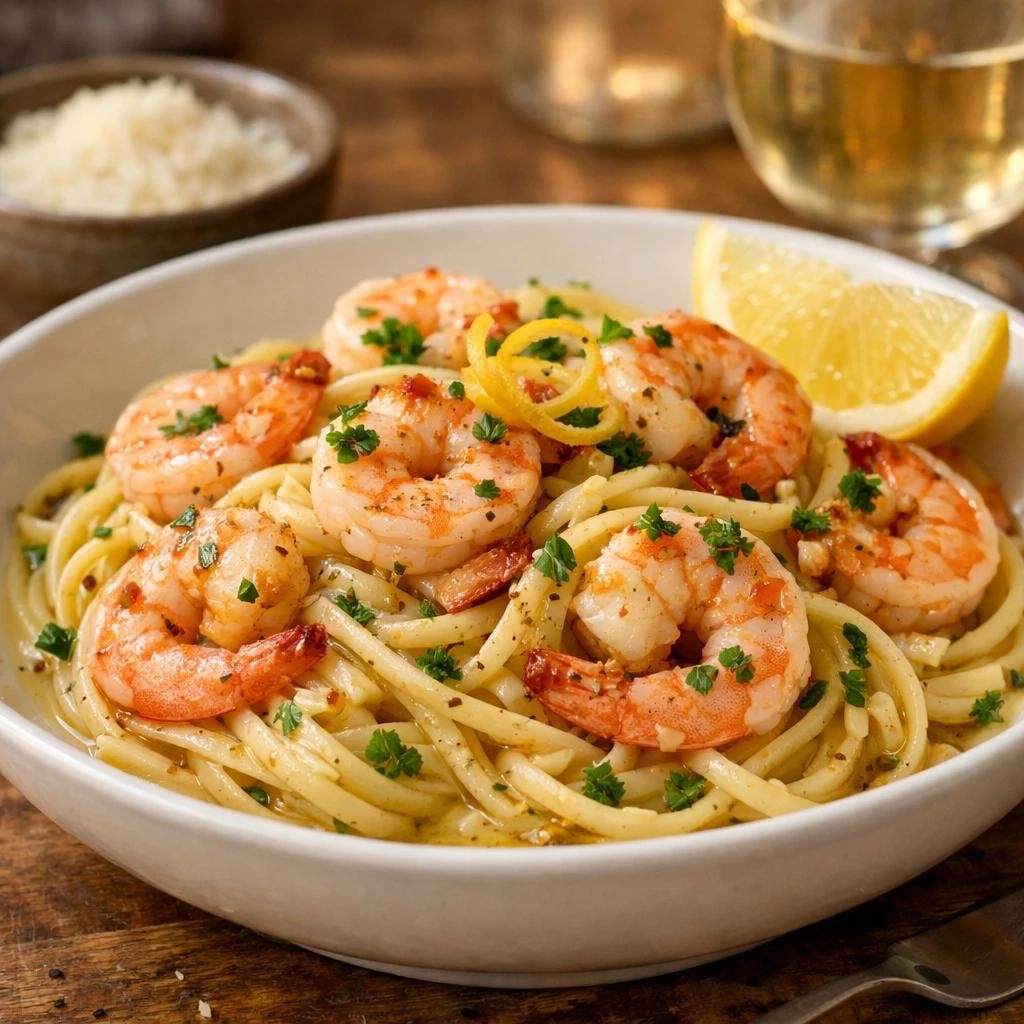
One-Pan Garlic Butter Shrimp Pasta is an easy seafood dinner made with tender shrimp, linguine, fresh garlic, butter, lemon, and a light, savory sauce. The pasta cooks right in the same skillet, absorbing the garlic-infused broth as it becomes tender.
It’s a practical choice for busy weeknights when you want a satisfying homemade meal without dealing with multiple pots and pans. Finished with fresh parsley and a squeeze of lemon, this shrimp pasta has a buttery, garlicky flavor with just enough brightness to keep every bite balanced.
Recipe Overview
| Detail | Information |
|---|---|
| Prep Time | 10 minutes |
| Cook Time | 25 minutes |
| Total Time | 35 minutes |
| Servings | 4 |
| Difficulty | Easy |
Why You’ll Love This Recipe
-
One-pan cooking: The shrimp and pasta come together in one large skillet, making cleanup easier.
-
Simple ingredients: Garlic, butter, lemon, broth, and shrimp create plenty of flavor without complicated ingredients.
-
Tender shrimp: Cooking the shrimp separately before returning them to the pasta helps prevent overcooking.
-
A flavorful sauce: The pasta absorbs the seasoned cooking liquid, while butter and lemon create a silky finish.
-
Weeknight-friendly: Everything comes together in about 35 minutes.
Ingredients

-
1 pound large shrimp, peeled and deveined
-
12 ounces linguine or spaghetti
-
4 tablespoons unsalted butter, divided
-
5 garlic cloves, minced
-
4 cups low-sodium chicken broth
-
½ cup water, plus more if needed
-
1 tablespoon olive oil
-
1 teaspoon Italian seasoning
-
½ teaspoon paprika
-
½ teaspoon salt, or to taste
-
¼ teaspoon black pepper
-
½ teaspoon red pepper flakes (optional)
-
2 tablespoons fresh lemon juice
-
1 teaspoon lemon zest
-
¼ cup freshly chopped parsley
-
Lemon wedges, for serving
-
¼ cup grated Parmesan cheese (optional)
Ingredient Notes
Shrimp: Large raw shrimp work best because they stay juicy and are easy to handle. Fresh or thawed frozen shrimp are both suitable. Pat them dry before seasoning.
Pasta: Linguine is a great choice because it holds the buttery sauce well. Spaghetti or fettuccine can also work.
Chicken broth: Low-sodium broth gives the pasta flavor without making the finished dish overly salty. Seafood stock is another option.
Butter and garlic: Unsalted butter gives you better control over seasoning. Fresh minced garlic provides the strongest flavor.
Lemon: Fresh lemon juice balances the richness of the butter. Add it toward the end rather than cooking it for the entire pasta simmer.
How to Make One-Pan Garlic Butter Shrimp Pasta
PREPARATION AND COOKING
1. Season the shrimp. Pat the shrimp dry with paper towels. In a bowl, combine them with paprika, Italian seasoning, salt, black pepper, and red pepper flakes if using. Toss until evenly coated.
2. Cook the shrimp. Heat olive oil and 1 tablespoon of butter in a large, deep skillet over medium-high heat. Arrange the shrimp in a single layer and cook for approximately 1–2 minutes per side, depending on their size. They should turn pink and opaque. Transfer them to a plate immediately.
3. Prepare the garlic butter base. Reduce the heat to medium. Add another tablespoon of butter to the same skillet. Stir in the minced garlic and cook for about 30 seconds, just until fragrant. Avoid browning or burning the garlic.
4. Add the pasta and liquid. Pour in the chicken broth and water. Add the uncooked linguine, arranging it in the skillet and gently pressing it into the liquid as it softens. Bring to a gentle boil.
5. Cook the pasta. Reduce the heat to medium-low and simmer uncovered for approximately 10–13 minutes, stirring and turning the pasta frequently. If the liquid becomes too low before the pasta is tender, add a little more hot water. The pasta should be al dente with some flavorful liquid remaining.
6. Finish the sauce. Turn the heat to low. Stir in the remaining 2 tablespoons of butter, lemon juice, and lemon zest. Toss until the butter melts and the cooking liquid becomes lightly glossy.
7. Return the shrimp. Add the cooked shrimp back to the skillet. Gently toss everything together for about 1 minute, just until the shrimp are heated through.
8. Garnish and serve. Sprinkle with fresh parsley and optional Parmesan. Serve immediately with lemon wedges.

Expert Tips
-
Use a wide, deep skillet: A 12-inch skillet with reasonably high sides gives the pasta enough room to soften and cook evenly.
-
Avoid overcooking shrimp: Shrimp cook quickly. Remove them from the skillet as soon as they turn opaque.
-
Stir the pasta regularly: This prevents strands from sticking together and helps them cook evenly.
-
Watch the liquid level: Different pasta shapes and brands absorb different amounts of liquid. Add hot water gradually if needed.
-
Finish with butter off high heat: Adding the final butter over low heat helps create a smoother sauce.
-
Adjust lemon at the end: Taste before serving and add more lemon juice if the sauce needs brightness.
Common Mistakes to Avoid
-
Cooking shrimp for too long: This makes them firm and rubbery. Cook them briefly and return them at the end.
-
Using too much heat: Rapid boiling can evaporate the liquid before the pasta cooks through.
-
Adding all the lemon juice too early: Prolonged cooking reduces its fresh citrus flavor.
-
Skipping the pasta stirring: Pasta strands can clump together when cooked directly in a skillet.
-
Adding too much liquid at once: Start with the stated quantity and add small amounts only when necessary.
Easy Variations
-
Spicy Garlic Shrimp Pasta: Increase the red pepper flakes for a little extra heat.
-
Creamy Garlic Butter Shrimp Pasta: Stir in ¼ cup heavy cream at the end for a richer sauce.
-
Spinach Shrimp Pasta: Add 2 cups fresh baby spinach during the final 2 minutes of cooking.
-
Tomato Garlic Shrimp Pasta: Add 1 cup halved cherry tomatoes when preparing the garlic butter base.
-
Extra Lemon Flavor: Increase the lemon zest and finish with additional fresh lemon juice.
Ingredient Substitutions
-
Linguine: Substitute spaghetti, fettuccine, or another similar long pasta. Cooking time may vary.
-
Chicken broth: Use seafood broth or vegetable broth instead.
-
Unsalted butter: Salted butter works, but reduce the added salt.
-
Fresh parsley: Substitute fresh basil or a smaller amount of dried parsley.
-
Fresh garlic: Garlic paste can work in a pinch, although freshly minced garlic provides better flavor.
What to Serve With It
This pasta is satisfying on its own, but a few simple sides make it a complete dinner.
-
Garlic bread: Perfect for soaking up the remaining buttery sauce.
-
Caesar salad: Its crisp lettuce and tangy dressing balance the richness of the pasta.
-
Roasted asparagus: Adds a fresh vegetable side without competing with the shrimp.
-
Steamed broccoli: Provides a simple, colorful addition.
-
Lemon green beans: Their freshness complements the garlic and seafood.
Storage & Reheating
Refrigerator: Store leftover shrimp pasta in an airtight container for up to 2 days. Refrigerate promptly, ideally within 2 hours of cooking.
Freezing: Freezing is not recommended because cooked shrimp can become tougher and the pasta may lose its texture after thawing.
Reheating: Warm leftovers gently in a skillet over low heat with 1–2 tablespoons of water or broth. Stir occasionally until heated throughout. Avoid prolonged heating because shrimp can easily become overcooked.
Frequently Asked Questions
1. Can I use frozen shrimp for garlic butter shrimp pasta?
Yes. Thaw frozen shrimp in the refrigerator before cooking, then drain and pat them dry. Excess moisture can interfere with browning.
2. Can I cook the pasta directly in the skillet?
Yes. That’s the main advantage of this recipe. The pasta simmers directly in the broth and absorbs the garlic and seasoning as it cooks.
3. What pasta works best with garlic butter shrimp?
Linguine and spaghetti are excellent choices. Fettuccine also works, although you may need to adjust the cooking liquid and time slightly.
4. How do I keep shrimp from becoming rubbery?
Cook shrimp briefly over medium-high heat until pink and opaque. Remove them from the skillet and return them only at the end to warm through.
5. Can I make this pasta creamy?
Yes. Add approximately ¼ cup heavy cream after the pasta has finished cooking. Stir gently over low heat until incorporated.
6. How do I know when the pasta is ready?
Taste a strand. It should be tender but still have a slight bite in the center. The sauce should look lightly glossy rather than watery.
Final Thoughts
One-Pan Garlic Butter Shrimp Pasta brings together simple ingredients in a way that makes weeknight cooking easier. The tender shrimp, buttery garlic sauce, and lemon-finished linguine create a balanced seafood dinner without a complicated cooking process. Serve it straight from the skillet while the sauce is warm and silky.
Leave a Reply