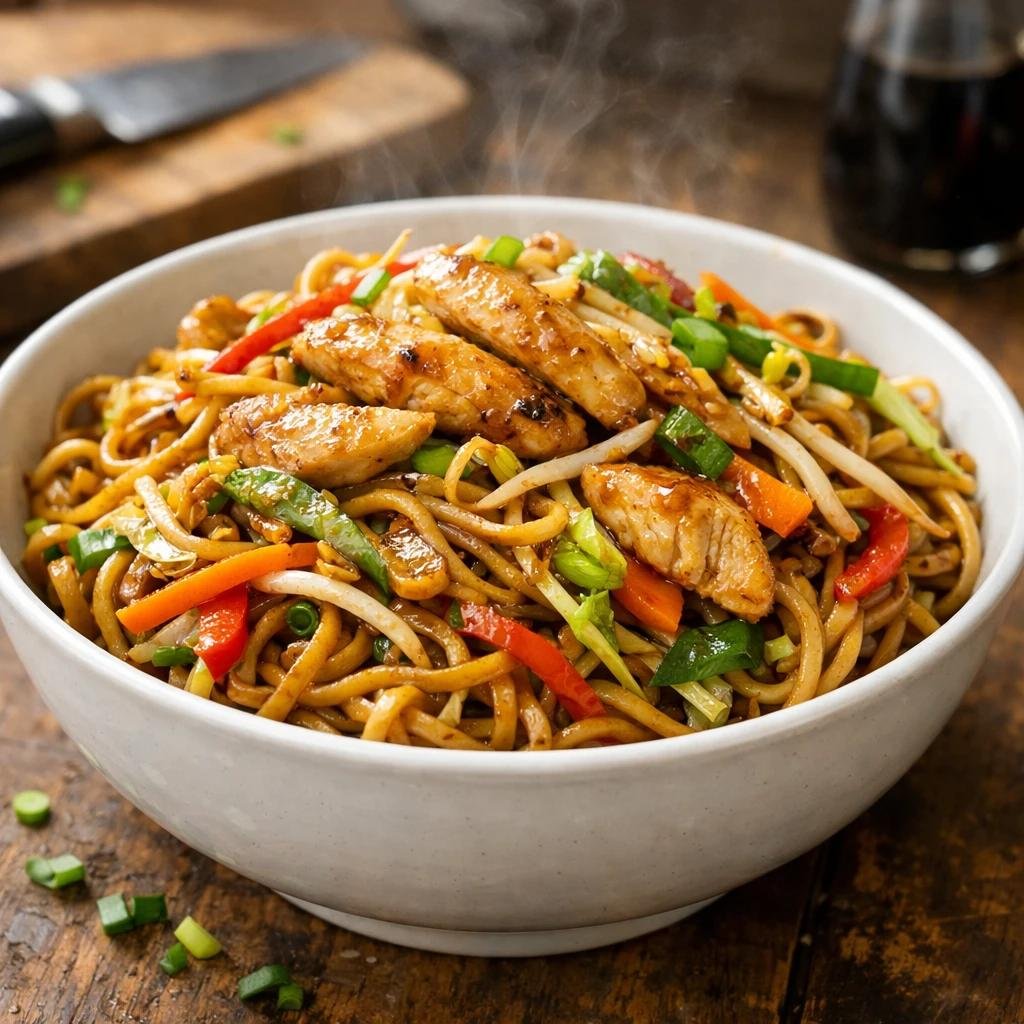
A quick, better-than-takeout chicken chow mein with tender chicken, crisp vegetables, chewy noodles, and a savory garlic-soy sauce. This Chinese-American takeout favorite is easy to make at home in one skillet or wok, making it a practical choice for busy weeknights when you want a satisfying dinner without ordering in.
The secret to great chicken chow mein is cooking the ingredients over high heat, keeping the vegetables slightly crisp, and tossing the noodles with just enough sauce to coat every bite without making them soggy.
Recipe Overview
Prep time
15 minutes
Cook time
15 minutes
Total time
30 minutes
Servings
4
Difficulty: Easy
Best cooked in a wok or large skillet over medium-high to high heat.
Why You’ll Love This Recipe
-
Ready in 30 minutes: A quick homemade dinner with minimal prep and straightforward cooking steps.
-
Better noodle texture: Cooking the ingredients in batches helps prevent a crowded, watery pan.
-
Savory takeout-style sauce: Soy sauce, oyster sauce, garlic, and sesame oil create a balanced, savory coating.
-
Plenty of vegetables: Cabbage, carrots, and green onions add crunch, freshness, and color.
-
Easy to customize: Swap the protein or add extra vegetables to use what you already have.
Ingredients

For the chicken and noodles
-
8 ounces dried chow mein noodles (or fresh chow mein noodles according to package directions)
-
1 pound boneless, skinless chicken breast, thinly sliced
-
2 tablespoons neutral cooking oil, divided
-
2 cups thinly sliced green cabbage
-
1 medium carrot, cut into thin matchsticks
-
3 green onions, sliced, whites and greens separated
-
3 cloves garlic, minced
-
1 teaspoon freshly grated ginger
For the chow mein sauce
-
3 tablespoons low-sodium soy sauce
-
2 tablespoons oyster sauce
-
1 tablespoon water
-
1 teaspoon toasted sesame oil
-
1 teaspoon cornstarch
-
1 teaspoon sugar
-
¼ teaspoon ground black pepper
Ingredient Notes
-
Chow mein noodles: Dried or fresh Chinese egg noodles work well. Follow the package instructions and avoid overcooking them before stir-frying.
-
Oyster sauce: It gives the sauce a rich, savory flavor. For a vegetarian alternative, use vegetarian mushroom stir-fry sauce.
-
Soy sauce: Low-sodium soy sauce helps you control the saltiness. Regular soy sauce also works, but the finished dish may taste saltier.
-
Chicken breast: Slice it thinly against the grain so it cooks quickly and stays tender.
-
Sesame oil: Use toasted sesame oil for its distinctive nutty aroma. A little goes a long way.
How to Make Chicken Chow Mein
Bring a pot of water to a boil and cook the chow mein noodles according to the package directions, stopping when they are just tender. Drain thoroughly and rinse briefly if the package recommends it. Toss with a small amount of oil if needed to prevent sticking.

Whisk the soy sauce, oyster sauce, water, sesame oil, cornstarch, sugar, and black pepper in a small bowl. Slice the chicken thinly, and prepare all the vegetables before turning on the stove.

Heat 1 tablespoon of oil in a large wok or skillet over medium-high to high heat. Add the chicken in a single layer and cook for about 4–6 minutes, stirring occasionally, until golden in spots and cooked through. Transfer to a clean plate.

Add the remaining tablespoon of oil. Stir-fry the carrot and cabbage for 2–3 minutes, then add the white parts of the green onions, garlic, and ginger. Cook for another 30–60 seconds, just until fragrant. The vegetables should soften slightly but retain some crunch.

Return the chicken to the pan and add the cooked noodles. Pour in the sauce and toss with tongs for 1–2 minutes, until the noodles are evenly coated and the sauce lightly clings to them. Add a tablespoon of water if the noodles seem dry.

Turn off the heat, add the green onion tops, and toss once more. Serve immediately while the noodles are hot and the vegetables still have a little crunch.

Expert Tips for the Best Chicken Chow Mein
-
Prepare everything first. Stir-frying moves quickly, so slice the chicken and vegetables and mix the sauce before heating the pan.
-
Use a large pan. A crowded skillet traps steam, making the noodles and vegetables soft instead of lightly stir-fried.
-
Drain the noodles well. Excess water dilutes the sauce and prevents it from clinging properly.
-
Cook the chicken in one layer. If your skillet is small, cook it in batches for better browning.
-
Keep the sauce balanced. Oyster sauce and soy sauce are already savory, so taste before adding extra salt.
-
Check the chicken’s temperature. Chicken should reach an internal temperature of 165°F (74°C) for food safety.
Common Mistakes to Avoid
-
Overcooking the noodles: They continue cooking when tossed in the hot pan. Drain them when just tender.
-
Adding garlic too early: Burnt garlic can taste bitter. Add it after the firmer vegetables and cook briefly.
-
Pouring in too much sauce: Excess liquid can make the noodles soggy. Measure the sauce and add water only if necessary.
-
Leaving the vegetables in too long: Cabbage and carrots should remain slightly crisp, not limp.
-
Using low heat in an overcrowded pan: Cook in batches if needed so the ingredients stir-fry instead of steam.
Easy Variations
-
Spicy chicken chow mein: Add 1–2 teaspoons of chili garlic sauce or sriracha to the sauce.
-
Extra vegetable chow mein: Add sliced bell peppers, mushrooms, or bean sprouts. Cook them briefly to preserve their texture.
-
Chicken and shrimp chow mein: Replace half the chicken with peeled shrimp, cooking the shrimp separately until opaque and cooked through.
-
Ginger-forward chow mein: Increase the fresh ginger to 2 teaspoons for a more pronounced aromatic flavor.
Ingredient Substitutions
-
Chicken thighs: Use boneless, skinless thighs instead of chicken breast. They have a richer flavor and are forgiving if slightly overcooked.
-
Spaghetti: If Chinese chow mein noodles are unavailable, regular spaghetti can work as a practical substitute, although the texture will differ.
-
Vegetarian oyster sauce: Mushroom-based stir-fry sauce provides a savory alternative. Check the label for suitability if cooking for vegetarians.
-
Tamari: Use gluten-free tamari and noodles labeled gluten-free if you need to avoid gluten. Verify that all sauces are suitable, too.
-
Brown sugar: Use the same quantity of white sugar or honey. Honey will add a slightly different sweetness.
What to Serve With Chicken Chow Mein
Chicken chow mein is a complete meal on its own, but these sides work well when you’re serving a larger dinner:
-
Steamed dumplings: Add a soft, savory side that complements the stir-fried noodles.
-
Egg drop soup: A light soup balances the richer, salty-sweet sauce.
-
Asian cucumber salad: Cool, crunchy cucumbers provide a refreshing contrast.
-
Steamed edamame: An easy vegetable side with a simple, lightly salted finish.
-
Spring rolls: Serve these when you want a takeout-inspired spread with different textures.
Storage & Reheating
Refrigeration: Let leftovers cool promptly and transfer them to an airtight container within two hours. Refrigerate at 40°F (4°C) or below and eat within 3–4 days.
Freezing: Chicken chow mein can be frozen in airtight, freezer-safe containers for up to 2 months for better quality. The vegetables may soften after thawing, and the noodles may lose some of their original texture.
Reheating: For the best texture, reheat in a skillet over medium heat with 1–2 tablespoons of water. Toss until steaming hot throughout. A microwave also works; cover loosely and stir halfway through. Reheat leftovers to 165°F (74°C).
Frequently Asked Questions
What noodles are best for chicken chow mein?
Chinese egg noodles labeled chow mein are a great choice. Fresh and dried varieties both work, but their cooking times differ. Follow the package directions and avoid cooking them until overly soft.
What is the difference between chow mein and lo mein?
Both dishes use Chinese-style noodles, but chow mein is typically associated with stir-fried noodles, sometimes with a crisp texture. Lo mein usually features softer noodles tossed with sauce. Restaurant preparations vary.
Can I make chicken chow mein without oyster sauce?
Yes. Substitute vegetarian mushroom stir-fry sauce or a suitable hoisin sauce. The flavor will change slightly, so start with a modest amount and adjust to taste.
Why is my chicken chow mein watery?
The most common reasons are wet noodles, a crowded pan, or too much sauce. Drain the noodles thoroughly, use a wide skillet, and cook in batches when necessary.
Can I prepare chicken chow mein ahead of time?
You can slice the chicken and vegetables and mix the sauce a day ahead, storing each separately in the refrigerator. For the best noodle texture, cook and stir-fry everything shortly before serving.
Is chicken chow mein spicy?
This version is mild, with a savory garlic-ginger sauce. Add chili garlic sauce, fresh chilies, or chili flakes if you prefer a spicy noodle dish.
Final Thoughts
Chicken chow mein is a practical homemade alternative to takeout, combining tender chicken, crisp vegetables, and savory noodles in one pan. Keep the ingredients ready before you start cooking, use a hot, spacious skillet, and serve the noodles immediately for the best texture.
Leave a Reply