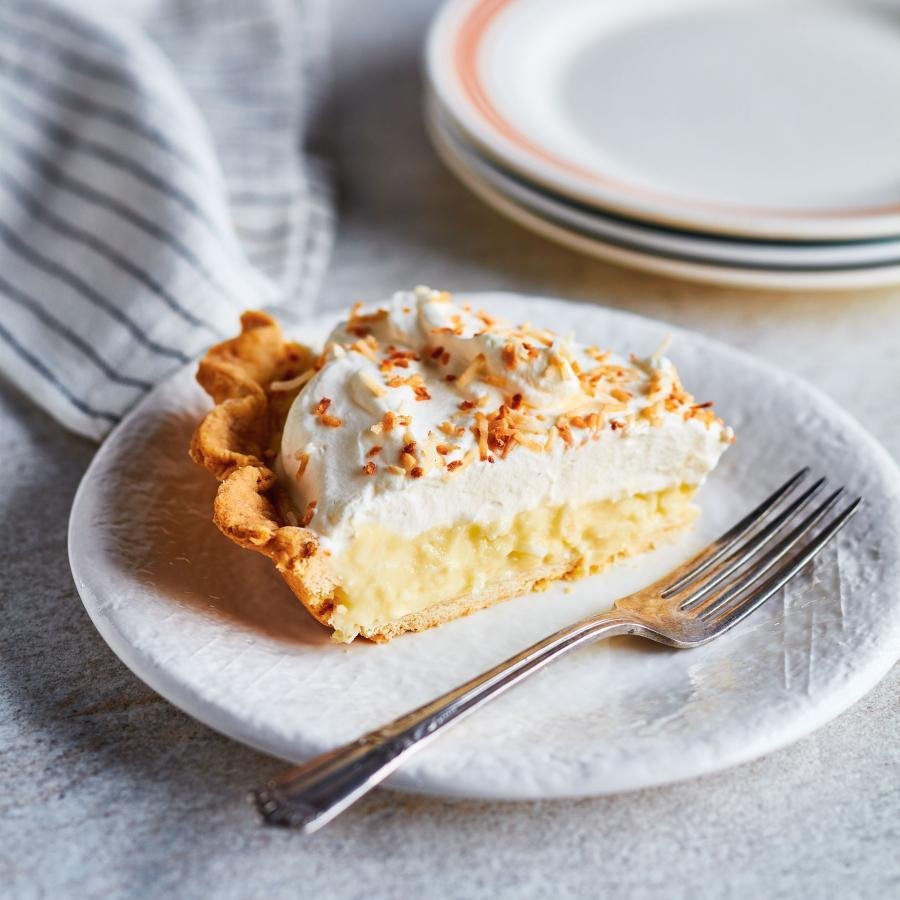
Coconut cream pie is a classic American dessert made with a flaky pie crust, silky coconut custard, fluffy whipped cream, and toasted coconut on top. The filling is rich and creamy without being overly heavy, while the coconut adds a sweet, nutty flavor to every bite.
This homemade coconut cream pie is a lovely choice for holidays, family gatherings, potlucks, or a weekend dessert. The filling is cooked on the stovetop, so you can control its thickness and flavor before chilling it in the crust. Allow enough time for the pie to cool and set, and you’ll have neat slices with a creamy center and a crisp coconut topping.
Recipe Overview
Prep Time
25 minutes
Cook Time
15 minutes
Chilling Time
4 hours
Total Time
4 hours 40 minutes
Servings
8 slices
Difficulty
Moderate
Total time includes chilling and assumes the pie crust is already baked and cooled.
Why You’ll Love This Recipe
-
Creamy homemade filling: Egg yolks, milk, coconut milk, and cornstarch create a smooth custard with a rich coconut flavor.
-
A contrast of textures: The crisp crust, soft filling, airy whipped cream, and toasted coconut make each bite interesting.
-
Make-ahead friendly: Prepare the pie ahead of your gathering and add the whipped cream topping closer to serving.
-
No complicated baking for the filling: The custard cooks on the stovetop rather than in the oven.
-
A classic crowd-pleaser: Its familiar flavor and chilled, sliceable texture make it suitable for celebrations and everyday desserts.
Ingredients

For the pie crust
– 1 fully baked and cooled 9-inch pie crust, homemade or store-bought
For the coconut custard filling
-
1 can (13.5 ounces) full-fat coconut milk, well shaken
-
1 cup whole milk
-
⅔ cup granulated sugar
-
¼ cup cornstarch
-
¼ teaspoon salt
-
4 large egg yolks
-
1 cup sweetened shredded coconut
-
2 tablespoons unsalted butter, cut into small pieces
-
2 teaspoons vanilla extract
For the whipped cream topping
-
1 cup cold heavy whipping cream
-
2 tablespoons powdered sugar
-
½ teaspoon vanilla extract
For garnish
– ¼ cup sweetened shredded coconut, toasted
Ingredient Notes
Coconut milk: Use full-fat canned coconut milk rather than refrigerated coconut beverage. Canned coconut milk provides the richness and coconut flavor needed for a traditional-style custard. Shake the can well before measuring.
Shredded coconut: Sweetened shredded coconut gives the filling and topping a familiar dessert-style sweetness. Unsweetened shredded coconut also works, but the finished pie will taste less sweet.
Egg yolks: Yolks add richness and help create a custard-like texture. Separate the eggs carefully so the whites do not get mixed into the filling.
Cornstarch: This thickens the custard and helps it hold its shape after chilling. Measure it accurately for a filling that is creamy rather than pasty.
Heavy whipping cream: Choose cream with enough fat to whip into stable peaks. Keep it cold until you’re ready to use it.
Pie crust: A fully baked crust is essential because the filling is prepared separately and does not need additional oven baking.
How to Make Coconut Cream Pie

Step 1: Prepare the custard ingredients
In a medium bowl, whisk the egg yolks until smooth. In a separate bowl, whisk together the sugar, cornstarch, and salt to remove any lumps.
In a medium saucepan, combine the coconut milk and whole milk. Heat over medium heat until the mixture is steaming and small bubbles begin to appear around the edges, about 3–5 minutes. Avoid letting it boil vigorously.
Step 2: Temper the egg yolks
Gradually whisk about ½ cup of the warm milk mixture into the egg yolks, adding it slowly while whisking constantly. This gently warms the yolks and helps prevent them from scrambling.
Pour the tempered egg mixture back into the saucepan. Add the sugar and cornstarch mixture, whisking until combined.
Step 3: Cook until thickened
Cook over medium heat, whisking continuously and paying particular attention to the bottom and corners of the pan. After approximately 5–8 minutes, the custard should become thick and glossy, with slow bubbles breaking through the surface.
Once it reaches a gentle boil, continue cooking for about 1 minute while whisking. The filling should be thick enough to coat a spoon and hold soft lines when you whisk through it.
Remove the saucepan from the heat.
Step 4: Add the coconut and vanilla
Whisk in the butter and vanilla extract until the butter has melted and the custard looks smooth. Fold in 1 cup of shredded coconut.
If the custard has a few small lumps, pass it through a fine-mesh sieve before adding the shredded coconut.
Step 5: Fill the pie crust

Pour the warm filling into the cooled, fully baked pie crust. Smooth the surface with a spatula.
Press a piece of food-safe plastic wrap directly against the custard’s surface to help prevent a skin from forming. Let the pie cool briefly at room temperature, then refrigerate for at least 4 hours, or until the filling is thoroughly chilled and set.
Do not leave the pie at room temperature for an extended period.
Step 6: Toast the coconut garnish
Place the remaining ¼ cup of shredded coconut in a dry skillet over medium-low heat. Stir frequently for 3–5 minutes, until the coconut is lightly golden and fragrant.
Transfer it to a plate immediately because coconut can burn quickly in a hot pan. Let it cool completely.
Step 7: Whip the cream and decorate
Just before serving, combine the cold heavy whipping cream, powdered sugar, and vanilla in a chilled mixing bowl.
Beat with a hand mixer until medium-stiff peaks form. The cream should hold its shape without looking grainy or separated.
Spread or pipe the whipped cream over the chilled pie, then sprinkle with the toasted coconut. Slice with a sharp knife, wiping the blade between cuts for cleaner slices.
Expert Tips
-
Whisk continuously. Cornstarch can settle and form lumps if the custard is left undisturbed. Keep whisking, especially as the mixture thickens.
-
Cook the filling long enough. Cornstarch needs sufficient heat to thicken properly. A custard that never reaches a gentle boil may remain loose after chilling.
-
Protect the custard surface. Press plastic wrap directly against the filling while it cools to minimize a thick skin.
-
Chill before decorating. Adding whipped cream to a warm pie can cause it to melt and slide. Wait until the filling is completely cold.
-
Toast coconut carefully. Stir often and remove it from the skillet as soon as it turns golden. Residual heat can continue browning it.
-
Use a fully cooled crust. A warm crust can soften the bottom and make the finished pie harder to slice neatly.
Common Mistakes to Avoid
-
Using coconut beverage instead of canned coconut milk: The thinner beverage can make the filling less rich and may affect its consistency.
-
Adding egg yolks directly to very hot milk: The yolks can scramble. Temper them first with a little warm liquid.
-
Stopping before the custard thickens: A runny filling may not set properly. Cook until it reaches the stated texture and gentle boil.
-
Skipping the chilling time: Cutting the pie too early can cause the filling to spill instead of forming neat slices.
-
Overwhipping the cream: Stop when the cream forms stable peaks. Continuing too long can make it grainy and eventually turn it into butter.
-
Using a soggy or unbaked crust: The filling is not baked in the oven, so the crust must be fully baked beforehand.
Easy Variations
-
Toasted coconut pie: Toast some of the shredded coconut before stirring it into the custard for a deeper, nuttier flavor.
-
Coconut cream pie with a graham cracker crust: Replace the traditional pastry crust with a fully prepared 9-inch graham cracker crust. The result will have a sweeter, crumbly base.
-
Chocolate coconut cream pie: Sprinkle finely shaved dark chocolate over the whipped cream, or add a thin layer of melted chocolate to the cooled crust before filling. Let the chocolate set first.
-
Almond coconut pie: Add a small amount of almond extract to the custard, starting with ⅛ teaspoon, for a subtle almond aroma.
-
Unsweetened coconut version: Use unsweetened shredded coconut and adjust the sweetness to taste. Keep in mind that the filling’s sugar also contributes to the overall balance.
Ingredient Substitutions
| Ingredient | Possible substitution | What changes |
|---|---|---|
| Whole milk | 2% milk | Slightly less rich filling |
| Sweetened shredded coconut | Unsweetened shredded coconut | Less sweetness |
| Cornstarch | All-purpose flour, in a properly adjusted custard recipe | Softer, less glossy texture; not a direct equal-volume swap |
| Homemade pie crust | Store-bought refrigerated pastry crust, baked according to its directions | Convenient alternative |
| Heavy whipping cream | Store-bought whipped topping | Different flavor and texture; follow the product’s storage instructions |
| Vanilla extract | Vanilla bean paste | Similar flavor, with visible vanilla specks |
Important: Coconut cream is not the same as coconut milk. Coconut cream is more concentrated and may change the filling’s thickness and richness. For this recipe, full-fat canned coconut milk is the more predictable choice.
What to Serve With Coconut Cream Pie

Fresh berries
Strawberries, raspberries, or blueberries provide a bright, slightly tart contrast to the sweet coconut filling.

Coffee or espresso
A cup of unsweetened coffee balances the pie’s creamy texture and sweetness.

Lemon water or iced tea
A refreshing, lightly citrusy drink complements the richness without adding more sweetness.
This pie is also a natural fit for Thanksgiving dessert tables, Easter gatherings, summer cookouts, and other occasions when a chilled dessert is welcome.
Storage & Reheating
Refrigerator: Keep the pie covered and refrigerated at 40°F (4°C) or below. For best texture, enjoy it within 3–4 days. If preparing ahead, you can make and chill the custard-filled pie a day in advance, then add the whipped cream and toasted coconut before serving.
Freezing: Freezing is not recommended for the best texture. Custard can become watery or grainy after thawing, and whipped cream may lose its structure. If you choose to freeze it, expect some texture changes and thaw it in the refrigerator rather than at room temperature.
Reheating: Coconut cream pie is intended to be served cold, so reheating is unnecessary. Keep individual slices refrigerated until ready to serve.
Food safety: Refrigerate the pie promptly and do not leave it at room temperature for more than 2 hours, or more than 1 hour when the temperature is above 90°F (32°C).
Frequently Asked Questions
1. Why is my coconut cream pie filling runny?
The custard may not have cooked long enough to activate the cornstarch, or the measurements may have been inaccurate. Bring the filling to a gentle boil while whisking and cook for about 1 minute. Then allow the pie at least 4 hours to chill and set.
2. Can I make coconut cream pie the day before?
Yes. Prepare the custard-filled pie, cover the surface, and refrigerate overnight. For the freshest appearance, whip the cream and add the toasted coconut shortly before serving.
3. Do I need to bake the filling?
No. The filling is cooked on the stovetop. However, the pastry crust must already be fully baked and cooled before you add the custard.
4. What is the difference between coconut cream pie and coconut custard pie?
Coconut cream pie typically has a stovetop-cooked filling that is chilled in a baked crust and finished with whipped cream. Coconut custard pie is commonly baked with its custard filling inside the crust, so its texture and preparation are different.
5. Can I use a graham cracker crust?
Yes. A prepared 9-inch graham cracker crust works well and gives the dessert a sweeter, crumbly base. Make sure it is firm and cooled before adding the custard.
6. How do I get clean slices?
Chill the pie until completely set, use a sharp knife, and wipe the blade clean between slices. A brief dip of the knife in warm water followed by drying can also help create smooth cuts.
Final Thoughts
A homemade coconut cream pie brings together a crisp crust, rich coconut custard, and a light whipped cream topping in one classic dessert. Give the filling enough time to chill, toast the coconut just before it gets too dark, and add the topping close to serving for the best presentation.
Leave a Reply