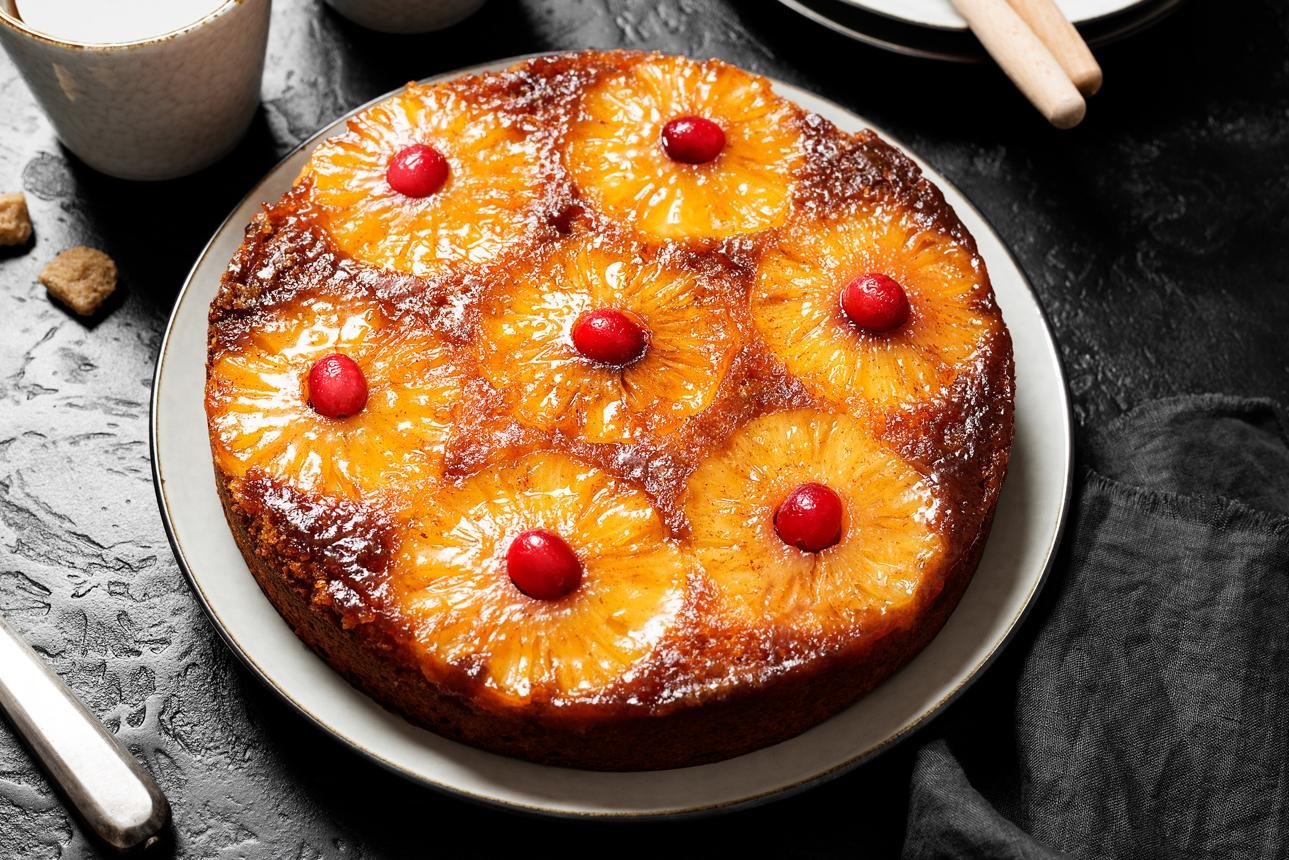
Pineapple Upside Down Cake is a classic American dessert featuring juicy pineapple rings, sweet brown sugar caramel, and a soft, buttery vanilla cake. The fruit is arranged at the bottom of the cake pan before baking, then the cake is carefully inverted to reveal a beautiful golden pineapple topping.
This homemade pineapple upside down cake has a tender, moist crumb with a rich caramelized topping and a hint of pineapple sweetness throughout. Maraschino cherries add a traditional finishing touch, making it a lovely dessert for family gatherings, holidays, potlucks, or weekend baking.
The best part? You don’t need complicated decorating techniques. The pineapple topping creates an attractive presentation all on its own.
Recipe Overview
| Detail | Information |
|---|---|
| Prep Time | 20 minutes |
| Cook Time | 40–45 minutes |
| Total Time | About 1 hour 5 minutes |
| Servings | 8–10 slices |
| Difficulty | Easy to moderate |
| Oven Temperature | 350°F (175°C) |
Why You’ll Love This Recipe
-
Beautiful presentation: Caramelized pineapple rings and cherries create a decorative topping without frosting.
-
Soft, buttery cake: The vanilla cake complements the sweet, slightly tangy pineapple.
-
Simple ingredients: Most ingredients are everyday baking staples.
-
Great for gatherings: One cake provides several generous slices.
-
Make-ahead friendly: The cake can be baked in advance and served at room temperature.
Ingredients
For the Pineapple Topping
-
¼ cup (56 g) unsalted butter
-
½ cup (100 g) packed light brown sugar
-
1 can (20 ounces) pineapple rings in juice, drained
-
8–10 maraschino cherries, drained and patted dry
For the Vanilla Cake
-
1½ cups (190 g) all-purpose flour
-
1½ teaspoons baking powder
-
¼ teaspoon salt
-
½ cup (113 g) unsalted butter, softened
-
¾ cup (150 g) granulated sugar
-
2 large eggs, room temperature
-
1 teaspoon vanilla extract
-
½ cup (120 ml) whole milk, room temperature
-
¼ cup (60 ml) pineapple juice reserved from the can
Ingredient Notes
-
Pineapple rings: Canned pineapple rings are convenient and provide consistent slices. Choose pineapple packed in juice rather than heavy syrup if possible.
-
Brown sugar: Light brown sugar creates a sweet caramel layer beneath the pineapple. Dark brown sugar can also be used for a deeper molasses flavor.
-
Maraschino cherries: These provide the traditional red accents. Drain and dry them before arranging to avoid adding excess liquid.
-
Unsalted butter: Butter gives the cake its rich flavor and helps create the caramelized topping.
-
Whole milk: Adds moisture and contributes to a tender cake texture.
-
Pineapple juice: A small amount adds pineapple flavor to the cake batter without overpowering the vanilla.
How to Make Pineapple Upside Down Cake
1. Prepare the oven and cake pan
Preheat your oven to 350°F (175°C). Lightly grease a 9-inch round cake pan, preferably one that is at least 2 inches deep.
Drain the pineapple rings, reserving ¼ cup of the juice for the cake batter. Pat the pineapple rings and cherries dry with paper towels.
2. Make the brown sugar topping
Melt ¼ cup butter and pour it into the prepared cake pan. Sprinkle the brown sugar evenly over the melted butter.
Arrange the pineapple rings over the brown sugar in a single layer. Place a maraschino cherry in the center of each ring. Cut additional pineapple pieces if needed to fill small gaps around the edges.
3. Mix the dry ingredients
In a medium bowl, whisk together the flour, baking powder, and salt.
Mixing the dry ingredients separately helps distribute the baking powder evenly throughout the cake.
4. Cream the butter and sugar
In a large mixing bowl, beat the softened butter and granulated sugar for about 2–3 minutes, until the mixture looks pale and fluffy.
Add the eggs one at a time, beating after each addition. Mix in the vanilla extract.
5. Combine the wet and dry ingredients
In a small measuring cup, combine the milk and reserved pineapple juice.
Add the flour mixture to the butter mixture in three additions, alternating with the milk and pineapple juice mixture. Begin and finish with the flour mixture.
Mix on low speed just until combined. Avoid overmixing, as this can make the cake dense.
6. Assemble the cake
Carefully spoon the batter over the arranged pineapple rings. Spread it evenly with a spatula, making sure the batter reaches the edges of the pan.
7. Bake the cake
Bake for approximately 40–45 minutes, or until the top is golden and a toothpick inserted into the center of the cake comes out clean or with a few moist crumbs.
If the top begins browning too quickly, loosely cover it with foil during the final portion of baking.
8. Cool and invert
Remove the cake from the oven and let it rest in the pan for about 10 minutes.
Run a thin knife around the edges to loosen the cake. Place a serving plate over the pan and carefully invert both together.
Lift the pan slowly to reveal the pineapple topping. If any pineapple pieces remain stuck to the pan, gently place them back on the cake while the topping is still warm.
Allow the cake to cool before slicing.
Expert Tips
-
Dry the pineapple well: Excess juice can make the topping watery and affect the cake’s texture.
-
Use room-temperature ingredients: Eggs, butter, and milk at appropriate temperatures help the batter combine evenly.
-
Don’t overmix: Once the flour is added, mix just until the ingredients are incorporated.
-
Choose the right pan: A 9-inch round cake pan that is at least 2 inches deep gives the batter enough room to rise.
-
Invert while warm: Let the cake rest for approximately 10 minutes before turning it out. Waiting until it is completely cold can make the caramel topping stick to the pan.
King Arthur Baking+1
-
Use a large serving plate: The warm caramel topping can spread beyond the edges of the cake, so choose a plate with enough room.
Common Mistakes to Avoid
-
Leaving too much liquid on the pineapple: Always drain and pat the fruit dry before arranging it.
-
Overbaking the cake: This can produce a dry, firm crumb. Start checking around 40 minutes.
-
Using cold butter for creaming: Cold butter will not incorporate air as effectively. Let it soften before mixing.
-
Mixing the batter too much: Excessive mixing after adding flour can develop gluten and make the cake tough.
-
Waiting too long to invert: The caramel can harden as it cools, making the cake difficult to release.
-
Flipping without loosening the edges: Run a thin knife around the pan before turning the cake onto a plate.
Easy Variations
-
Pineapple Coconut Cake: Add ¼ cup sweetened shredded coconut to the cake batter for a subtle coconut flavor.
-
Spiced Pineapple Cake: Add ½ teaspoon ground cinnamon to the dry ingredients.
-
Pecan Pineapple Cake: Scatter ¼ cup chopped pecans between the pineapple rings.
-
Fresh Pineapple Version: Use fresh pineapple rings instead of canned ones. Slice them evenly and pat them dry before arranging.
-
Brown Butter Version: Brown the butter used in the cake batter, let it cool until soft, and use it in place of regular softened butter for a nuttier flavor.
Ingredient Substitutions
| Original Ingredient | Substitute |
|---|---|
| Light brown sugar | Dark brown sugar |
| Whole milk | 2% milk |
| Maraschino cherries | Fresh or frozen cherries, pitted and dried |
| Canned pineapple | Fresh pineapple rings |
| Unsalted butter | Salted butter, reducing the added salt slightly |
| All-purpose flour | A suitable 1:1 gluten-free baking flour blend |
Keep in mind that fresh pineapple may vary in sweetness and moisture, while gluten-free flour blends can produce a slightly different cake texture.
What to Serve With Pineapple Upside Down Cake
-
Vanilla ice cream: Its cool, creamy texture pairs nicely with the warm caramelized pineapple.
-
Fresh berries: Strawberries, raspberries, and blueberries add a refreshing contrast.
-
Whipped cream: A small spoonful adds light creaminess without making the dessert too heavy.
-
Coffee: A cup of freshly brewed coffee balances the cake’s sweetness.
-
Hot tea: Black tea or lightly spiced tea makes a simple afternoon pairing.
Storage & Reheating
Refrigerator: Allow the cake to cool completely, then cover it or transfer it to an airtight container. Refrigerate for up to 4 days.
Freezer: Individual slices can be wrapped tightly and frozen in an airtight freezer-safe container for up to 2 months. The pineapple topping may become slightly softer after thawing.
Reheating: Warm individual slices in the microwave for approximately 10–15 seconds at a time until gently warmed. Avoid overheating because the caramel topping can become very hot.
Serving after refrigeration: Let slices sit at room temperature briefly before serving, or enjoy them slightly chilled.
Frequently Asked Questions
1. Can I use fresh pineapple instead of canned pineapple?
Yes. Fresh pineapple works well. Cut it into evenly sized rings or slices, remove the core, and pat the pieces dry before arranging them in the pan.
2. Why is my pineapple upside down cake soggy?
Excess pineapple juice, insufficient baking, or storing the cake while it is still warm can contribute to a soggy texture. Drain the pineapple thoroughly, check the center for doneness, and cool the cake before storing.
3. When should I flip pineapple upside down cake?
Let the cake rest for about 10 minutes after baking. Loosen the edges, place a serving plate over the pan, and carefully invert while the topping is still warm.
4. Can I make pineapple upside down cake ahead of time?
Yes. You can bake it a day ahead and refrigerate it once completely cooled. Keep it covered and allow it to lose some of its chill before serving.
5. Can I make this recipe in a rectangular baking pan?
Yes. An 8-inch square pan can work, but the cake will be thicker and may require additional baking time. Check the center with a toothpick rather than relying only on the clock.
6. Do I have to use maraschino cherries?
No. They are traditional but optional. You can leave them out or replace them with another pitted fruit that works well for baking.
Final Thoughts
Pineapple Upside Down Cake brings together a buttery vanilla cake, sweet caramel, and juicy pineapple in one simple dessert. Its attractive fruit topping makes it suitable for celebrations, family dinners, and casual get-togethers.
Serve it slightly warm or at room temperature, with a little whipped cream or vanilla ice cream for an easy homemade dessert.
Leave a Reply