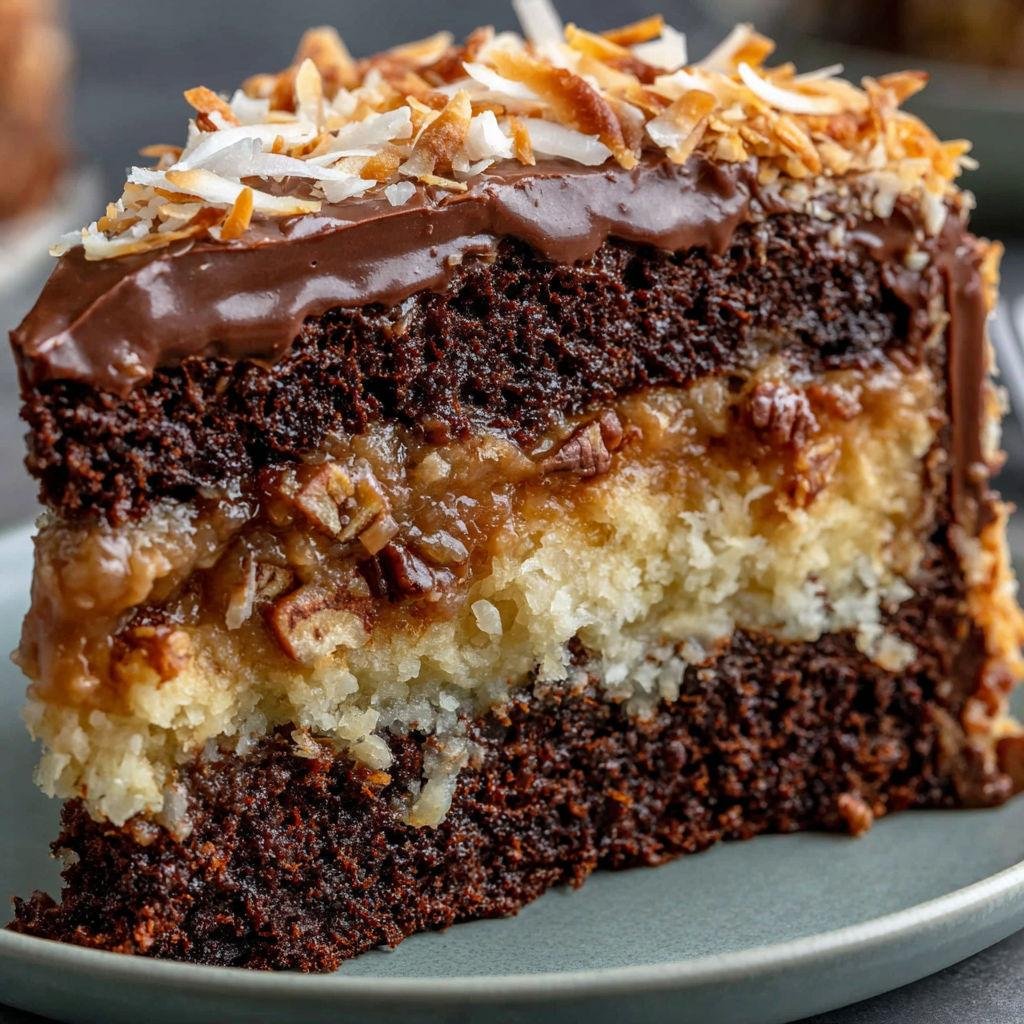
German Chocolate Cake is a classic American layer cake made with tender chocolate cake layers, rich coconut-pecan frosting, and a smooth chocolate flavor throughout. Unlike a traditional chocolate cake covered entirely in buttercream, this cake is known for its distinctive filling, made with sweetened coconut and chopped pecans in a creamy caramel-like mixture.
It’s a lovely choice for birthdays, holidays, family celebrations, or any occasion when you want a homemade chocolate cake with a little extra texture. The recipe below features moist chocolate layers and a generous coconut-pecan filling, with optional chocolate frosting around the sides for a traditional bakery-style finish.
Recipe Overview
| Detail | Information |
|---|---|
| Prep Time | 35 minutes |
| Cook Time | 35 minutes |
| Cooling Time | 1 hour 30 minutes |
| Total Time | Approximately 2 hours 40 minutes |
| Servings | 12 |
| Difficulty | Intermediate |
Why You’ll Love This Recipe
-
Moist chocolate layers: Buttermilk, oil, and hot coffee help create a soft, tender cake with a deep chocolate flavor.
-
Classic coconut-pecan filling: The creamy filling adds sweetness, toasted nut flavor, and a pleasant chewy texture.
-
Beautiful layers: Three cake layers make an impressive centerpiece for celebrations.
-
Balanced textures: Soft chocolate cake pairs wonderfully with the thick, slightly chewy coconut-pecan topping.
-
Make-ahead friendly: The cake layers and filling can be prepared in advance, making assembly easier.
Ingredients
For the Chocolate Cake
-
2 cups (250 g) all-purpose flour
-
2 cups (400 g) granulated sugar
-
¾ cup (75 g) unsweetened natural cocoa powder
-
2 teaspoons baking powder
-
1½ teaspoons baking soda
-
1 teaspoon salt
-
2 large eggs, at room temperature
-
1 cup (240 ml) buttermilk, at room temperature
-
½ cup (120 ml) neutral vegetable oil
-
2 teaspoons vanilla extract
-
1 cup (240 ml) hot brewed coffee
For the Coconut-Pecan Frosting
-
1 cup (240 ml) evaporated milk
-
1 cup (200 g) granulated sugar
-
3 large egg yolks
-
½ cup (113 g) unsalted butter
-
1 teaspoon vanilla extract
-
1½ cups (120 g) sweetened shredded coconut
-
1 cup (110 g) chopped pecans
-
¼ teaspoon salt
Optional Chocolate Buttercream
-
½ cup (113 g) unsalted butter, softened
-
1¾ cups (210 g) powdered sugar
-
¼ cup (25 g) unsweetened cocoa powder
-
2–3 tablespoons milk
-
½ teaspoon vanilla extract
-
A small pinch of salt
Ingredient Notes
Cocoa powder: Natural unsweetened cocoa powder gives the cake a classic chocolate flavor. Avoid using sweetened drinking chocolate.
Buttermilk: It adds moisture and acidity, helping the cake develop a tender crumb. If unavailable, mix 1 tablespoon of lemon juice or white vinegar into 1 cup of milk and let it stand for 5–10 minutes.
Hot coffee: Coffee enhances the chocolate flavor without making the cake taste strongly of coffee. Hot water can be used instead.
Evaporated milk: Use evaporated milk rather than sweetened condensed milk. They have different sweetness and consistency and are not interchangeable in this frosting.
Pecans: Chopped pecans provide the traditional nutty texture. Toasting them lightly before adding them can deepen their flavor.
Sweetened coconut: This is the traditional choice for the filling because it contributes sweetness and a soft, chewy texture.
How to Make German Chocolate Cake
1. Prepare the Cake Pans
Preheat the oven to 350°F (175°C). Grease three 8-inch round cake pans and line their bottoms with parchment paper.
Lightly grease the parchment as well to make removing the cakes easier.
2. Combine the Dry Ingredients
In a large mixing bowl, whisk together the flour, sugar, cocoa powder, baking powder, baking soda, and salt.
Break up any cocoa lumps so the dry mixture is evenly combined.
3. Add the Wet Ingredients
Add the eggs, buttermilk, vegetable oil, and vanilla extract.
Mix on medium-low speed until the ingredients are combined and the batter looks smooth.
Slowly pour in the hot coffee while mixing on low speed. The batter will become quite thin. This is normal for this chocolate cake.
4. Bake the Cake Layers
Divide the batter evenly between the prepared pans.
Bake for approximately 30–35 minutes, or until a toothpick inserted into the center comes out with a few moist crumbs rather than wet batter.
Let the cakes cool in their pans for about 10 minutes. Carefully turn them out onto wire racks and allow them to cool completely.
5. Prepare the Coconut-Pecan Frosting
In a medium saucepan, whisk together the evaporated milk, sugar, egg yolks, butter, and salt.
Place over medium heat, stirring continuously until the butter melts and the mixture begins to thicken. This generally takes 10–15 minutes.
The mixture should become thick enough to coat the back of a spoon. Avoid allowing it to boil vigorously.
Remove the saucepan from the heat and stir in the vanilla extract, shredded coconut, and chopped pecans.
Transfer the frosting to a bowl and allow it to cool until thick and spreadable.
6. Make the Optional Chocolate Buttercream
Beat the softened butter until creamy.
Add the powdered sugar and cocoa powder gradually, mixing on low speed.
Add the vanilla, salt, and enough milk to create a smooth, spreadable frosting.
Beat briefly until fluffy.
7. Assemble the Cake
Place one completely cooled cake layer on a serving plate.
Spread approximately one-third of the coconut-pecan frosting over the top, leaving a small border around the edge.
Add the second cake layer and repeat.
Place the final layer on top and spread the remaining coconut-pecan frosting over it.
If desired, cover the sides with the chocolate buttercream for a more finished appearance.
Allow the assembled cake to rest for approximately 20–30 minutes before slicing so the filling can settle.
Expert Tips
-
Use room-temperature ingredients: Eggs and buttermilk blend more evenly when they aren’t cold.
-
Don’t worry about thin batter: The hot coffee makes this batter noticeably thinner than many traditional cake batters. That’s expected.
-
Cool the cake completely: Warm cake layers can melt the filling and make the layers slide during assembly.
-
Cook the frosting slowly: Medium heat and constant stirring help the egg yolks thicken the mixture without scrambling.
-
Let the filling cool before spreading: It becomes thicker as it cools, making it easier to keep between the cake layers.
-
Toast the pecans: A few minutes in a dry skillet over medium-low heat can bring out their nutty flavor. Cool them before adding to the filling.
Common Mistakes to Avoid
-
Overbaking the cake: This can make the chocolate layers dry. Begin checking around 30 minutes.
-
Adding hot filling to the cake: Warm filling can soften the cake and cause the layers to shift.
-
Cooking the frosting over high heat: High heat can cause the egg yolks to curdle. Keep stirring over medium heat.
-
Using condensed milk instead of evaporated milk: Condensed milk contains considerably more sugar and changes the consistency of the frosting.
-
Assembling warm cake layers: Always wait until the layers are completely cool before frosting.
-
Making the filling too thin: Give it enough cooking time to thicken, and allow it to cool before assembling.
Easy Variations
-
Traditional German Chocolate Cake: Use Baker’s German’s Sweet Chocolate, melted and cooled, as the chocolate base instead of cocoa powder. Adjust the cake formula to account for the added sugar and fat rather than simply replacing the cocoa.
-
Extra Chocolate Version: Add a thin layer of chocolate ganache between the cake layers along with the coconut-pecan filling.
-
Chocolate Drizzle: Finish the assembled cake with a little melted semisweet chocolate for extra chocolate flavor.
-
Toasted Coconut Version: Lightly toast some of the coconut and sprinkle it over the finished cake for additional texture.
-
Two-Layer Cake: Divide the batter between two 9-inch round pans. Baking time may vary, so check for doneness rather than relying only on the clock.
Ingredient Substitutions
| Original Ingredient | Possible Substitute | What to Expect |
|---|---|---|
| Buttermilk | Milk mixed with 1 tablespoon vinegar | Similar acidity, slightly different texture |
| Vegetable oil | Canola oil | Almost identical result |
| Coffee | Hot water | Milder chocolate flavor |
| Pecans | Walnuts | Similar crunch, slightly different flavor |
| Sweetened shredded coconut | Unsweetened shredded coconut | Less sweetness and a slightly drier filling |
| Evaporated milk | Whole milk | Thinner filling; not a direct one-to-one replacement without adjusting the cooking method |
For the most recognizable German chocolate cake flavor, keep the coconut and pecans in the frosting.
What to Serve With German Chocolate Cake
German Chocolate Cake is rich and sweet, so simple accompaniments work especially well.
-
Fresh strawberries: Their mild tartness balances the sweetness of the cake.
-
Vanilla ice cream: A cool, creamy scoop pairs nicely with the chocolate layers.
-
Fresh raspberries: Their slightly tart flavor provides contrast to the coconut-pecan filling.
-
Coffee: Black coffee or espresso complements the chocolate without adding more sweetness.
-
Lightly sweetened whipped cream: A small spoonful adds a soft, airy contrast to the thick frosting.
Storage & Reheating
Refrigerator: Store the assembled cake in an airtight cake container or cover it well. Refrigerate for up to 4 days because the coconut-pecan frosting contains cooked eggs and dairy.
For the best texture, let individual slices stand at room temperature briefly before serving.
Freezing: Unfrosted cake layers freeze particularly well. Wrap each completely cooled layer tightly in plastic wrap, followed by foil, and freeze for up to 2 months.
The assembled cake can also be frozen, although the coconut-pecan filling may change slightly in texture after thawing.
Thawing: Thaw frozen cake layers overnight in the refrigerator while wrapped. Bring them closer to room temperature before assembling.
Reheating: This cake is generally served at room temperature rather than reheated. If you prefer a slightly warmer slice, warm an individual piece very briefly and gently, without overheating the filling.
Frequently Asked Questions
1. Why is it called German Chocolate Cake?
Despite its name, German Chocolate Cake did not originate in Germany. It is named after Samuel German, who developed a sweet baking chocolate for Baker’s Chocolate Company in 1852. The cake became widely known after a recipe appeared in a Dallas newspaper in 1957.
The Saturday Evening Post+1
2. Does German Chocolate Cake need to be refrigerated?
Yes. Because its traditional coconut-pecan frosting contains egg yolks and evaporated milk, refrigerate the cake after serving. Avoid leaving it at room temperature for more than 2 hours.
3. Can I make German Chocolate Cake a day ahead?
Yes. You can bake the cake layers and prepare the coconut-pecan frosting a day ahead. Store them separately in the refrigerator, then assemble the cake when everything is properly cooled.
4. Why is my coconut-pecan frosting runny?
The frosting may not have cooked long enough, or it may still be warm. Continue cooking gently until it thickens enough to coat the back of a spoon, then let it cool completely before using.
5. Can I make this cake without pecans?
Yes. Walnuts are a suitable alternative. You can also leave the nuts out, although the filling will lose some of its characteristic crunch.
6. Can I make German Chocolate Cake in advance and freeze it?
Yes. Freezing the unfrosted cake layers is the best option for maintaining texture. Wrap them well and freeze for up to 2 months. Thaw in the refrigerator before assembling.
Final Thoughts
German Chocolate Cake stands out because of its combination of tender chocolate cake and rich coconut-pecan frosting. The layers, creamy filling, and nutty texture make it a wonderful dessert for birthdays, holidays, and special gatherings.
For the best result, allow enough time for the cake and filling to cool before assembling. That small detail makes a big difference when creating neat, attractive layers.
Leave a Reply