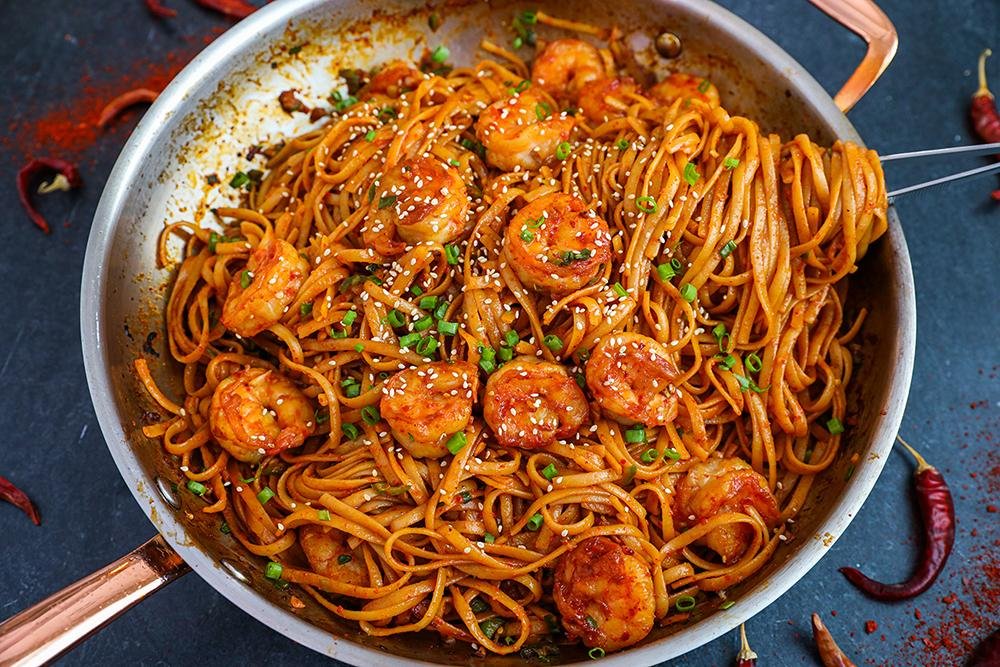
One-Pot Honey Garlic Shrimp Noodles combine tender shrimp, savory noodles, and a sweet-and-garlicky sauce in one skillet. The sauce brings together honey, garlic, soy sauce, and a little rice vinegar for a balanced flavor that’s savory, slightly sweet, and easy to enjoy.
The best part is that the noodles cook right in the same pot, absorbing flavor as they soften. Add the shrimp near the end so they stay tender, and you’ll have a satisfying weeknight dinner with minimal cleanup. It’s a great option when you’re craving takeout-style shrimp noodles without ordering in.
Recipe Overview
| Detail | Information |
|---|---|
| Prep Time | 10 minutes |
| Cook Time | 20 minutes |
| Total Time | 30 minutes |
| Servings | 4 |
| Difficulty | Easy |
Why You’ll Love This Recipe
-
One-pot cooking: The noodles and shrimp come together in one skillet, keeping cleanup simple.
-
Balanced sauce: Honey adds sweetness, soy sauce brings savory depth, and rice vinegar keeps the flavors balanced.
-
Quick dinner: Everything comes together in about 30 minutes.
-
Tender shrimp: Adding shrimp toward the end prevents them from becoming rubbery.
-
Easy to customize: Add vegetables or adjust the spice level to suit your preferences.
Ingredients
-
1 pound large raw shrimp, peeled and deveined
-
8 ounces linguine or spaghetti
-
1 tablespoon olive oil
-
4 cloves garlic, minced
-
3 cups low-sodium chicken broth
-
1 cup water
-
¼ cup low-sodium soy sauce
-
3 tablespoons honey
-
1 tablespoon rice vinegar
-
1 teaspoon sesame oil
-
1 tablespoon cornstarch
-
2 tablespoons cold water
-
½ teaspoon red pepper flakes (optional)
-
2 green onions, sliced
-
1 teaspoon sesame seeds
-
Salt and black pepper, to taste
Ingredient Notes
Shrimp: Large raw shrimp work best because they cook quickly while remaining juicy. Fresh or frozen shrimp can be used. If using frozen shrimp, thaw and pat them dry before cooking.
Noodles: Linguine and spaghetti both work well. Their shape holds the honey garlic sauce nicely. Break long noodles in half if needed to fit your skillet.
Honey: Regular honey provides the sweetness and helps create a glossy sauce.
Soy sauce: Low-sodium soy sauce gives you better control over the saltiness. Regular soy sauce can also be used, but you may need less additional salt.
Rice vinegar: A small amount balances the sweetness without making the sauce taste overly sour.
How to Make One-Pot Honey Garlic Shrimp Noodles
1. Prepare the shrimp and sauce. Pat the shrimp dry and season lightly with black pepper. In a small bowl, whisk together soy sauce, honey, rice vinegar, sesame oil, and red pepper flakes. In another small bowl, mix cornstarch with 2 tablespoons cold water until smooth.
2. Cook the garlic. Heat olive oil in a large, deep skillet over medium heat. Add minced garlic and cook for about 30 seconds, stirring frequently. Once fragrant, avoid letting it brown.
3. Add the noodles and liquid. Pour in the chicken broth and water. Bring to a gentle boil, then add the linguine. Reduce the heat to medium-low and cook uncovered, stirring and turning the noodles frequently so they soften evenly and don’t stick together.
4. Cook the noodles until nearly tender. Simmer for approximately 8–10 minutes, depending on the pasta. If the liquid reduces too quickly before the noodles are tender, add a little warm water. Keep enough liquid in the skillet to create the sauce.
5. Add the shrimp. Stir in the prepared honey garlic mixture. Arrange the shrimp among the noodles and cook for approximately 2–3 minutes, turning once, until they are opaque and reach an internal temperature of 145°F.
6. Thicken the sauce. Stir the cornstarch mixture again and pour it into the skillet. Toss gently for about 30–60 seconds until the sauce thickens and coats the noodles. If the sauce becomes too thick, add a splash of warm water or broth.
7. Garnish and serve. Remove the skillet from the heat. Taste and adjust the seasoning if needed. Finish with sliced green onions and sesame seeds. Serve immediately while the noodles are warm and glossy.
Expert Tips
-
Use a wide skillet: A large, deep skillet gives the noodles enough room to cook evenly.
-
Stir frequently: Pasta cooked in one pot can stick together, especially as the liquid reduces.
-
Watch the shrimp carefully: Shrimp cook quickly. Remove the skillet from the heat as soon as they’re opaque and reach 145°F.
-
Adjust the liquid gradually: Different pasta shapes and brands absorb different amounts of liquid. Add warm broth or water as needed.
-
Add the cornstarch last: This allows you to control the final sauce consistency without making it overly thick.
Common Mistakes to Avoid
-
Overcooking shrimp: Adding shrimp too early can make them tough. Wait until the noodles are almost tender.
-
Using too little liquid: The pasta needs sufficient liquid to soften. Add extra warm water if necessary.
-
Cooking garlic over high heat: Burnt garlic can make the sauce bitter. Use medium heat.
-
Adding cornstarch directly: Always dissolve it in cold water first to prevent lumps.
-
Skipping the final taste test: Soy sauce varies in saltiness, so adjust seasoning before serving.
Easy Variations
-
Spicy honey garlic noodles: Add extra red pepper flakes or a little chili garlic sauce.
-
Vegetable shrimp noodles: Add broccoli florets, thinly sliced bell peppers, or shredded carrots.
-
Extra garlic version: Increase the garlic to 5–6 cloves for a stronger garlic flavor.
-
Ginger honey garlic noodles: Add 1 teaspoon freshly grated ginger when cooking the garlic.
-
Chicken version: Replace shrimp with thinly sliced chicken breast. Cook the chicken thoroughly before adding the noodles and other ingredients.
Ingredient Substitutions
-
Linguine: Substitute spaghetti, fettuccine, or rice noodles. Rice noodles may require a different cooking method and liquid quantity.
-
Chicken broth: Vegetable broth or water with appropriate seasoning can be used.
-
Honey: Maple syrup works as an alternative, although it gives the sauce a slightly different flavor.
-
Rice vinegar: Apple cider vinegar can work in a smaller amount.
-
Soy sauce: Use tamari for a gluten-free alternative, and choose gluten-free noodles and broth as needed.
-
Olive oil: Neutral vegetable or avocado oil works equally well.
What to Serve With It
These noodles are filling on their own, but a simple side dish can round out the meal.
-
Steamed broccoli: Adds freshness and a mild vegetable flavor.
-
Asian cucumber salad: Its crisp texture and tangy dressing complement the sweet sauce.
-
Steamed edamame: A simple protein-rich side.
-
Asian-style cabbage slaw: Provides a crunchy contrast to the tender noodles.
-
Vegetable spring rolls: A suitable side when serving the noodles as part of a larger dinner.
Storage & Reheating
Refrigerator: Allow leftovers to cool promptly and transfer them to an airtight container. Refrigerate within 2 hours and enjoy within 3–4 days.
Freezing: Freezing is not recommended because cooked shrimp can become rubbery and the noodles may soften after thawing.
Reheating: Warm leftovers in a skillet over low heat with 1–2 tablespoons of water or broth. Stir gently until heated throughout. Avoid prolonged heating, which can toughen the shrimp.
Frequently Asked Questions
1. Can I use frozen shrimp for honey garlic noodles?
Yes. Thaw frozen shrimp completely in the refrigerator or using a safe cold-water method. Pat them dry before adding them to the skillet.
2. Can I make these noodles without chicken broth?
Yes. Vegetable broth or water can replace chicken broth. Using broth generally gives the noodles a more savory flavor.
3. How do I prevent the noodles from sticking together?
Stir and separate the noodles regularly while they cook. Make sure they have enough liquid and avoid letting the skillet become completely dry.
4. Can I add vegetables to this recipe?
Absolutely. Broccoli, bell peppers, carrots, and snap peas are good additions. Cut vegetables into small, even pieces so they cook quickly. Add firmer vegetables earlier than softer ones.
5. How do I know when the shrimp are cooked?
Properly cooked shrimp become opaque and reach an internal temperature of 145°F. Avoid cooking them longer than necessary because they can become tough.
6. Can I make honey garlic shrimp noodles ahead of time?
You can prepare the sauce and clean the shrimp ahead of time. For the best noodle texture, cook everything shortly before serving.
Final Thoughts
One-Pot Honey Garlic Shrimp Noodles are a practical dinner option when you want something flavorful without using several pans. The noodles soak up the savory-sweet sauce, while the shrimp add a tender, satisfying finish. Keep the cooking simple, adjust the sauce to your taste, and serve straight from the skillet for an easy weeknight meal.
Leave a Reply